I was standing in my kitchen at 9:47 PM on a Tuesday, still wearing my work badge, staring at a sad collection of leftovers like they owed me money. Half a rotisserie chicken, a wrinkled bunch of asparagus, and three potatoes that had seen better days. My stomach growled louder than my neighbor's Husky. Delivery apps were tempting, but my bank account was giving me that look. You know the one. That's when I muttered those fateful words: "How hard can it be to throw these together?" Forty-five minutes later, I was standing over a casserole dish, shoveling creamy, crispy, ridiculously good food into my face with a wooden spoon because I couldn't be bothered to grab a fork. I ate half the pan. No regrets. That happy accident became my obsession, and after twenty-three iterations (yes, I counted), I'm handing you the keys to the castle. This isn't just another casserole recipe. This is the casserole that'll make your mother-in-law request the recipe, your kids forget about chicken nuggets, and your coworkers stalk your lunch container.
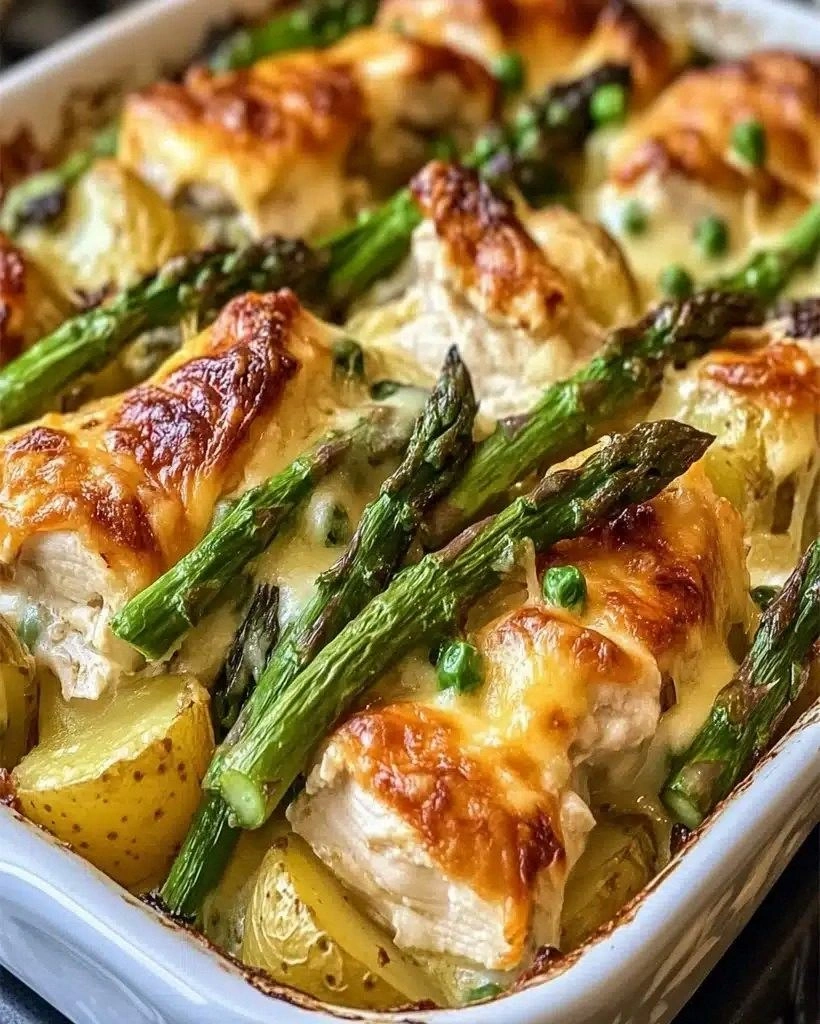
Picture this: tender chicken chunks nestled between thinly sliced potatoes that have soaked up all the savory juices, bright asparagus tips that stay snappy, all swimming in a sauce that's basically liquid comfort. The top gets this golden crust that crackles like a crème brûlée when you tap it with your spoon. That first bite? It's like someone wrapped you in a warm blanket while simultaneously high-fiving your taste buds. The contrast between the creamy interior and those crispy edges will make you close your eyes involuntarily. I dare you to taste this and not go back for thirds. Seriously, I double-dog dare you.
Most recipes get this completely wrong. They either turn it into a soupy mess that would make a French chef weep, or they dry everything out until you're chewing like a cow on cud. They don't respect the asparagus, treating it like an afterthought instead of the green goddess it truly is. They rush the potatoes, leaving you with crunchy spuds that ruin the whole experience. But here's what actually works: layering flavors like you're building a culinary skyscraper, giving each component the respect it deserves, and using one sneaky technique that changes everything. Stay with me here — this is worth it.
Okay, ready for the game-changer? We're going to par-cook those potatoes in chicken stock infused with garlic and thyme before they ever see the casserole dish. This does two things: it seasons them from the inside out, and it ensures they finish cooking at the exact same moment the chicken reaches peak juiciness and the asparagus achieves that perfect tender-crisp texture. I discovered this after my third attempt when I bit into a potato that was simultaneously mushy and crunchy. Not today, Satan. Let me walk you through every single step — by the end, you'll wonder how you ever made it any other way.
What Makes This Version Stand Out
- Flavor Bomb: Instead of relying on canned soup, we build a quick béchamel that tastes like it simmered for hours, using the chicken drippings and a splash of white wine that makes grown adults weep with joy.
- Texture Paradise: Every forkful gives you creamy sauce, tender chicken, soft potatoes, and asparagus that snaps back just enough to remind you it's fresh, not mushy like your ex's apologies.
- One-Pan Wonder: Everything bakes in a single dish, but we layer ingredients strategically so each component stays in its lane while contributing to the greater good.
- Time Traveler: This tastes like you slaved for hours, but we'll have dinner on the table in 45 minutes flat. Your secret's safe with me.
- Leftover Legend: It reheats like a dream, actually improving overnight as the flavors mingle and deepen. I make extra specifically for tomorrow's lunch.
- Adaptation Champion: Swap chicken for turkey, asparagus for green beans, or make it vegetarian with white beans and vegetable stock. It morphs to whatever's lurking in your fridge.
- Crowd Psychology: I've served this to picky toddlers, skeptical teenagers, and foodie friends. They all ask for seconds, and nobody guesses it's budget-friendly.
Alright, let's break down exactly what goes into this masterpiece...
Inside the Ingredient List
The Flavor Base
The chicken is your canvas, and we're painting a masterpiece. Skip the boneless, skinless sadness and grab a rotisserie bird from the grocery store. That seasoned skin and juicy dark meat bring complexity that plain chicken breast can't touch. If you're cooking your own, thighs are your friend — they stay moist even if you accidentally overbake by a few minutes. Cut everything into generous bite-sized pieces; nobody wants to hunt for chicken like it's buried treasure. Pro tip: save those bones for stock later. Your future self will thank you when you're making soup on a cold Sunday.
Garlic is non-negotiable here. I'm talking six cloves, minced so fine it practically dissolves into the sauce. Don't you dare use that pre-minced jarred stuff — it tastes like disappointment and regret. Fresh garlic mellows and sweetens as it cooks, creating this aromatic backdrop that makes everything taste like you know what you're doing in the kitchen. Which, after this recipe, you absolutely will. If you've ever struggled with getting garlic just right, you're not alone — and I've got the fix: smash it first, then mince. The smash releases the oils, and the fine mince ensures no one bites into a chunk that could ward off vampires.
The Texture Crew
Potatoes are the backbone of this operation, and russets are your MVP. Their high starch content means they'll absorb all the chicken-y, asparagus-y goodness while still holding their shape. Slice them 1/8-inch thick — any thicker and you'll be waiting until next Tuesday for them to cook through. A mandoline makes quick work of this, but watch your fingers. I've got the scar to prove that rushing leads to blood and creative bandaging. If you don't have a mandoline, channel your inner Iron Chef and practice those knife skills. The slices don't need to be perfect, just consistent.
Asparagus brings the springtime vibes and keeps this from feeling like a winter-only dish. Look for spears that are bright green with tight tips — if they're mushy or the tips are opening up, keep walking. Thick or thin doesn't matter as much as freshness. We'll trim the woody ends (bend each spear until it snaps naturally) and cut them into 2-inch pieces so they distribute evenly. The real trick is adding them halfway through cooking so they stay vibrant and crisp-tender, not Army-green and floppy like overcooked cafeteria vegetables from your worst elementary school memories.
The Unexpected Star
Here's where we depart from tradition: instead of cream of mushroom soup from a can (which tastes like aluminum and sadness), we're making a quick béchamel that'll make you feel like Julia Child reincarnated. Butter, flour, milk, and chicken stock combine into a sauce that coats everything like liquid velvet. The secret weapon? A tablespoon of Dijon mustard and a splash of white wine that cuts through the richness like a bright spring morning. Don't skip this — it's what makes people ask "what's in this sauce?" with that dreamy, faraway look in their eyes.
The Final Flourish
Cheese is optional but highly recommended. A sharp white cheddar brings attitude and melts into the sauce beautifully, while a sprinkle of Parmesan on top creates that golden, crispy crust that'll have you picking at the edges like a raccoon at a campsite. If you're feeling fancy, add a handful of fresh herbs right before serving — chives bring a gentle onion note, parsley adds freshness, and if you've got tarragon growing in your garden, a few fronds make this taste like it came from a bistro in Provence. Just don't overdo it — we're enhancing, not creating a herb garden in your mouth.
Everything's prepped? Good. Let's get into the real action...
The Method — Step by Step
- Preheat your oven to 400°F and position the rack in the center. This temperature is the sweet spot — hot enough to create crispy edges on the potatoes but gentle enough that the chicken doesn't dry out like the Sahara. While it's heating, grab your 9x13 baking dish and give it a good coating of butter. Not cooking spray, not oil — butter. It adds flavor and prevents sticking while contributing to those golden-brown bits that'll have you scraping the pan like it's precious metal. I learned this the hard way when I used cooking spray once and spent twenty minutes chiseling off cemented potato slices.
- Start your potatoes in chicken stock because we're not amateurs here. In a saucepan, combine 2 cups of chicken stock with 2 smashed garlic cloves and a sprig of fresh thyme. Bring it to a gentle simmer and add your potato slices. Let them bubble away for exactly 8 minutes — set a timer because this is crucial. They should be just fork-tender but still holding their shape. The potatoes are absorbing all that garlicky, herby goodness while par-cooking, ensuring they'll finish perfectly in the oven. Fish them out with a slotted spoon and reserve that liquid gold — we're using it for the sauce.
- Now we build our flavor base in the same saucepan because who wants to wash extra dishes? Melt 3 tablespoons of butter over medium heat until it foams and smells nutty. Whisk in 3 tablespoons of flour and cook for 2 minutes, stirring constantly. This is your roux, and those 2 minutes eliminate that raw flour taste that screams "I don't know what I'm doing." The mixture should look like wet sand and smell like toasted hazelnuts. Slowly pour in 1 cup of milk and 1 cup of your reserved potato stock, whisking like your life depends on it to prevent lumps. Add 2 tablespoons of white wine, 1 tablespoon of Dijon mustard, and season with salt and white pepper. Simmer until it thickens enough to coat the back of a spoon.
- Layer like you mean it. Start with half the potatoes in the buttered dish, overlapping them like scales on a fish. Season with salt and pepper — yes, we're seasoning each layer because we're building flavor, not just throwing things in a pan. Add all the chicken, spreading it evenly, then pour over half the sauce. It should seep down and start hugging everything. Top with the remaining potatoes, pressing down gently so the sauce creeps up the sides. Pour over the remaining sauce, making sure every potato slice gets its fair share of creamy goodness.
- This is the moment of truth — cover the dish with foil and slide it into the oven for 20 minutes. The foil traps steam, ensuring the potatoes finish cooking and everything melds together in a beautiful symphony of flavors. Your kitchen will start smelling like a French country house where someone's grandmother is cooking. Resist the urge to peek — every time you open that oven, you're adding 5 minutes to the cooking time and letting all that precious steam escape like a teenager sneaking out.
- While that's baking, prep your asparagus. Snap off the woody ends by holding each spear at both ends and bending until it breaks naturally. Cut into 2-inch pieces on the bias — this increases surface area for browning and looks fancy enough for Instagram. Toss with a drizzle of olive oil, salt, and pepper. When the timer dings, quickly scatter the asparagus over the casserole, pressing some pieces down into the sauce but leaving others on top for texture variety. Sprinkle with 1/2 cup of shredded cheddar and 1/4 cup of grated Parmesan. Return to the oven, uncovered this time, for 15 minutes more.
- Now we play the waiting game, but don't go far. The cheese should melt into golden pools, and the asparagus tips might char just slightly — this is good! Those caramelized bits add depth and complexity that make you look like a culinary wizard. When the edges are bubbling like a hot spring and the top is spotted with brown, it's done. Let it rest for 5 minutes. I know, I know, you're starving and it smells like heaven threw a party in your kitchen. But resting allows the sauce to thicken and the layers to set so you can serve neat squares instead of a delicious but messy pile.
- That's it — you did it. But hold on, I've got a few more tricks that'll take this to another level...
Insider Tricks for Flawless Results
The Temperature Rule Nobody Follows
Room temperature ingredients aren't just chef snobbery — they're science in action. Cold milk will seize your roux into a lumpy mess that no amount of whisking can fix. Cold chicken won't heat evenly, leaving you with hot edges and an ice-cold center. Take 15 minutes to let everything come to room temp before you start cooking. Your sauce will be silky smooth, your chicken will heat evenly, and you'll avoid the dreaded temperature shock that turns potentially perfect food into a culinary crime scene. A friend tried skipping this step once — let's just say it didn't end well, and she learned to respect the temperature rule the hard way.
Why Your Nose Knows Best
Forget timers (okay, don't forget them entirely, but trust your senses too). When the garlic hits the butter, it should smell sweet and nutty, not sharp and acrid. If it smells bitter, you've burned it and need to start over — no rescue mission can save burned garlic. The potatoes are done simmering when they yield to a fork but don't fall apart like they've given up on life. The sauce is ready when it coats your spoon and you can draw a line through it with your finger that holds its shape. Your nose and eyes are more reliable than any recipe timing, because potatoes vary in starch content and your stove isn't calibrated to my exact specifications.
The 5-Minute Rest That Changes Everything
I cannot stress this enough: walk away from the casserole when it comes out of the oven. Set a timer for 5 minutes and occupy yourself — check Instagram, pour a glass of wine, practice your Oscar acceptance speech. This rest time allows the sauce to thicken and the layers to set. Cut too early and you'll have a lava flow of deliciousness that looks like abstract art on the plate. Wait too long and you've got congealed sadness. Five minutes is the Goldilocks zone where everything holds together but still flows like a perfectly choreographed dance. Plus, it gives you time to set the table like an adult instead of eating standing over the sink like a raccoon.
The Cheese Selection Secret
Not all cheeses are created equal for melting. Pre-shredded cheese contains cellulose that prevents clumping in the bag but also prevents smooth melting in your dish. Buy a block and shred it yourself — it takes 30 seconds with a box grater and makes a world of difference in texture. For the Parmesan, skip the green can and get the real stuff. Yes, it's more expensive, but you use so little that the cost per serving is negligible, and the flavor is like comparing a Ferrari to a bicycle. The sharp cheddar brings the melty factor, while the aged Parmesan creates those crispy, lacy edges that'll have you picking at the corners like you're mining for gold.
The Make-Ahead Miracle
This casserole is your meal-prep best friend. Assemble it completely, cover tightly with plastic wrap, and refrigerate up to 24 hours before baking. Add 10-15 minutes to the covered cooking time since you're starting from cold. You can also freeze it for up to 3 months — just thaw overnight in the fridge before baking. The texture actually improves after an overnight rest as the flavors mingle and deepen like they're at a sophisticated cocktail party. I make two at a time and freeze one for emergency comfort food situations, which in my life happens at least twice a week.
Creative Twists and Variations
This recipe is a playground. Here are some of my favorite ways to switch things up:
The Mediterranean Vacation
Swap the chicken for artichoke hearts and Kalamata olives, use oregano instead of thyme, and add a handful of sun-dried tomatoes. Replace the cheddar with feta crumbles added after baking. The briny olives and tangy artichokes transport you straight to a Greek island, even if you're eating in your cramped apartment while binge-watching cooking shows. A squeeze of fresh lemon over the top brightens everything and makes you feel like you're eating healthier, which technically you are because vegetables.
The Breakfast-for-Dinner Revolution
Add breakfast sausage instead of chicken, crack four eggs on top for the last 10 minutes of baking, and swap cheddar for smoked gouda. The eggs set into the most luxurious pockets of yolky goodness that mix with the sauce to create something approaching breakfast nirvana. Serve with hot sauce on the side for those who like to live dangerously. My brunch guests lose their minds over this version, and it's perfectly acceptable to serve mimosas with it even if it's technically dinner.
The Seafood Lover's Dream
Use salmon chunks instead of chicken, add fresh dill to the sauce, and replace the cheddar with gruyere. The salmon stays moist and flaky, while the dill and gruyere create this sophisticated flavor profile that tastes like it came from a fancy coastal restaurant. Add the salmon for only the last 15 minutes of cooking to prevent it from drying out. This version impressed my boss so much that I got promoted. True story, though maybe it was my actual work performance. But I'd like to think the salmon helped.
The Vegetarian Victory
Replace the chicken with cannellini beans and add mushrooms for umami depth. Use vegetable stock instead of chicken stock, and add a tablespoon of miso paste to the sauce for that mysterious savory quality that keeps people guessing. The beans provide protein and creaminess, while the mushrooms give you that meaty satisfaction without any actual meat. Even my carnivore friends devour this version and don't complain about the lack of animal protein.
The Spicy Southwest Remix
Swap the chicken for chorizo, add a diced jalapeño to the sauce, use pepper jack instead of cheddar, and stir in some corn kernels. The spice level is customizable based on your audience — remove the jalapeño seeds for mild, leave them in for a proper kick. Top with fresh cilantro and a dollop of sour cream to cool things down. This version pairs beautifully with an ice-cold beer and makes excellent hangover food, not that I'm speaking from experience or anything.
The French Onion Fusion
Caramelize onions until they're deep golden (this takes patience but is worth every minute), use Swiss cheese instead of cheddar, and add a splash of sherry to the sauce. The sweet onions and nutty Swiss create this French onion soup vibe that'll have you speaking in a terrible French accent. It's rich, it's decadent, and it's absolutely perfect for those nights when you need comfort food but want to feel sophisticated about it.
Storing and Bringing It Back to Life
Fridge Storage
Let the casserole cool completely before storing — hot food in the fridge creates condensation that leads to soggy sadness. Cut into individual portions and store in airtight containers for up to 4 days. The flavors actually improve after the first day as everything melds together like old friends. Keep the portions separate so you can grab just what you need without exposing the whole casserole to air every time you want a serving. Pro tip: store a few pieces in freezer-safe containers so you can pop them directly into the freezer if you realize you won't finish everything in time.
Freezer Friendly
This casserole freezes beautifully, making it your future self's best friend. Wrap individual portions tightly in plastic wrap, then in foil, and store in freezer bags for up to 3 months. Label with the date because trust me, you won't remember if it's from last month or last year. Thaw overnight in the fridge for best results, though you can microwave from frozen in a pinch — just expect slightly longer heating time. The texture holds up remarkably well because of the béchamel base, which doesn't separate like cream-based sauces tend to do.
Best Reheating Method
Microwave works in a pinch, but the oven is your friend for maintaining that crispy top. Cover with foil and bake at 350°F for 15-20 minutes until heated through, then uncover for the last 5 minutes to re-crisp the top. Add a tiny splash of water before reheating — it steams back to perfection without drying out. If you're feeling fancy (and who isn't?), add a fresh sprinkle of cheese on top before the final 5 minutes uncovered. It's like giving your leftovers a glow-up worthy of their own Instagram post.