Picture this: it is a gray, drizzly Tuesday, the kind that makes your bones feel like they have been soaking in cold tea, and I am standing in my kitchen wearing mismatched socks and a hoodie that smells faintly of yesterday’s espresso. I had sworn I was going to meal-prep something sensible—steamed broccoli, maybe a skinless chicken breast—yet the only thing echoing between my fridge and my stomach is a primal chant for melted cheese, caramelized onions, and the kind of comfort that can only come from a bowl that steams up your glasses. In a moment of reckless culinary abandon I dump ground beef and pork into a bowl, crank open the beef broth, and start slicing onions so thin they practically dissolve into tears. Twenty-five minutes later I am jabbing a toothpick into the first test meatball, blowing on it like it is molten lava, and the second that umami-bomb hits my tongue I know I have invented something dangerous: French onion soup in meatball form. I ate half the batch before anyone else got to try it—honest confession—and I do not even feel guilty because if you had been there, you would have done the exact same thing.
Most recipes get French onion flavor completely wrong. They toss in a sad pinch of onion powder, maybe a splash of grocery-store broth, and call it a day. That is like painting a Ferrari with watercolor. Real French onion depth demands slow-cooked, mahogany-sweet onions, nutty Gruyère, and a sauce that coats each orb of meat like liquid velvet. Today we are going full Paris bistro, but we are trading the soup crocks for a cast-iron skillet so everything gets those crispy lacy edges that shatter like thin ice under your fork. The meatballs stay juicy thanks to a milk-and-breadcrumb panade, the sauce gets body from a whisper of flour and a waterfall of broth, and the cheese—oh, the cheese—melts into Instagram-worthy strings that will haunt your dreams in the best possible way.
If you have ever struggled with dry meatballs, bland sauce, or onions that refuse to caramelize, you are not alone—and I have the fix. We are talking restaurant-level flavor with home-cook sanity: one bowl, one skillet, and a method so foolproof you could probably pull it off half-asleep on a camp stove. Okay, maybe do not try that, but you get my drift. Picture yourself pulling this out of the oven, the whole kitchen smelling like a French cottage where someone is playing Edith Piaf and pouring Beaujolais. Your roommate wanders in, lifts an eyebrow, and wordlessly hands you a spoon because words would just slow the journey from skillet to mouth. I dare you to taste this and not go back for seconds; I double-dog dare you to stop at thirds.
Stay with me here—this next part is worth it. We are about to build layers of flavor like a composer stacking orchestral movements, starting with a meatball mixture that is so tender it practically sighs when you press it, moving through onions that go from sharp and white to jammy and bronze, and finishing with a cheese pull so dramatic it deserves its own slow-motion video. Let me walk you through every single step—by the end, you will wonder how you ever made it any other way.
What Makes This Version Stand Out
- Depth Overload: Instead of a quick sauté, we slow-cook the onions for a solid 25 minutes until they collapse into sugary silk, giving the sauce that quintessential French onion sweetness you can taste in your back molars.
- Two-Meat Magic: A 50/50 blend of beef and pork hits the jackpot of beefy backbone and porky richness; turkey or chicken can tag in if you are leaning lighter, but you will miss that unctuous swagger.
- Panade Power: Soaking breadcrumbs in milk before mixing them into the meat is like giving your meatballs a tiny internal sponge that keeps them bouncy even if you accidentally overcook them by a minute or two.
- One-Skillet Wonder: We sear, sauce, and melt in the same pan, which means every brown bit—those glorious fond memories—ends up in your final dish, not down the drain.
- Cheese Insurance: A one-two punch of nutty Gruyère and mild mozzarella guarantees both complex flavor and that legendary stretch, so you get the best of both worlds without needing a culinary degree.
- Make-Ahead Hero: Roll the meatballs the night before, park them on a parchment-lined sheet, and cover tightly; the flavors actually improve overnight like a good marinara or your favorite pair of jeans.
- Leftover Lifesaver: Reheated leftovers taste even better because the meatballs lounge in the sauce absorbing all that oniony goodness—if you actually have leftovers, which is statistically unlikely.
Alright, let us break down exactly what goes into this masterpiece...
Inside the Ingredient List
The Flavor Base
Ground beef and pork are the Beyoncé and Jay-Z of the meatball world—each solid on their own, but together they are an empire. The beef brings iron-rich depth, the pork brings subtle sweetness and extra intramuscular fat, which translates to meatballs that squish instead of bounce when you bite them. If you are the kind of shopper who stands at the butcher case paralyzed by indecision, ask for 80/20 beef and a nice fatty pork shoulder grind; leaner mixes will give you golf balls, and nobody wants to eat a Titleist for dinner. Skip either meat and you will still get a decent bite, but the chorus in your mouth will be missing a harmony line.
The Texture Crew
Fine dry breadcrumbs and whole milk form a panade—basically a paste that sneaks between meat fibers and refuses to let them seize up under heat. Think of it as a bouncer at the protein nightclub, keeping things loose and hydrated while the party gets hot. Without this dynamic duo your meatballs can turn into something you could chuck through a window, so do not skip it even if you are on some keto crusade; almond flour and oat milk work in a pinch, but they will not deliver the same cloud-like interior. Season the breadcrumb mixture with a pinch of salt and a crack of pepper while it soaks; every layer gets a voice in this choir.
The Unexpected Star
Parmesan does more than add a salty, nutty punch—it is umami concentrate, a microscopic snow of glutamates that convinces your brain you are eating something ten times meatier than you actually are. If your wedge of Parm has been lurking in the fridge so long it could legally vote, give it the sniff test; it should smell like toasted hazelnits and aged cream, not a gym sock. In a pinch, pecorino romano or even a sharp aged cheddar can substitute, but they will steer the flavor bus toward sheepy or buttery towns; still delicious, just a different route. Grate it yourself; the pre-ground stuff in the green can is mostly sawdust and regret.
The Final Flourish
Yellow onions are the sleeper hit here; sliced into half-moons and slowly coaxed into submission, they transform from harsh and sulfurous to jammy and sweet, like kitchen alchemy without the obscure Latin incantations. Use the biggest, heaviest skillet you own so they have room to sweat instead of steam; crowding leads to gray, mushy sadness. A knob of unsalted butter plus a drizzle of neutral oil prevents the dairy solids from burning before the onions give up their moisture. You will know you have arrived when the bottom of the pan looks like a mosaic of dark gold flecks—those are your future sauce flavor bombs.
Everything is prepped? Good. Let us get into the real action...
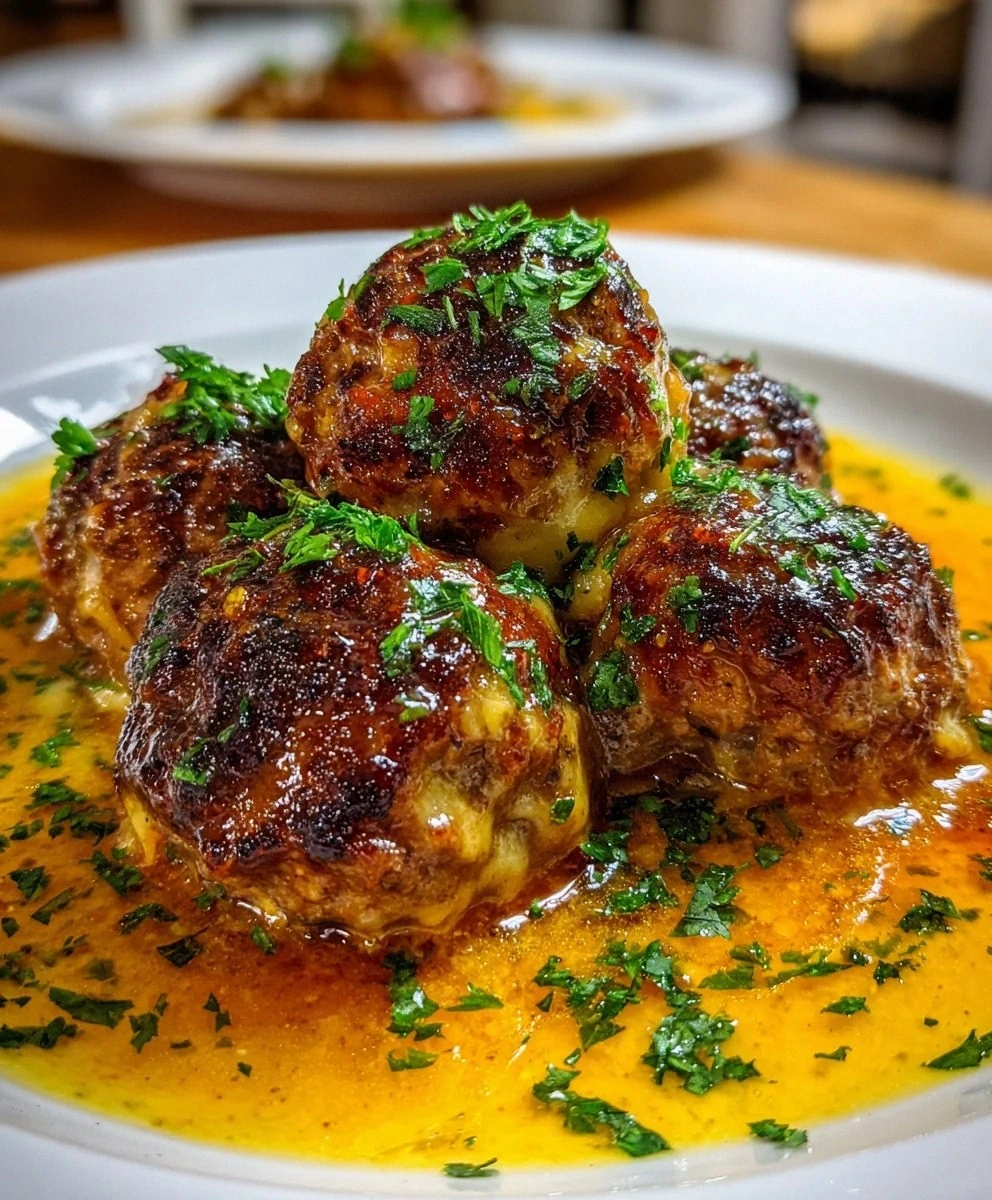
The Method — Step by Step
- Start by making the panade: in a small bowl, combine fine dry breadcrumbs with whole milk, stir until it looks like wet sand at the edge of a beach, and let it sit while you mince the onion and parsley. This five-minute soak is the difference between meatballs that feel like cotton balls and ones that sigh apart like a slow-motion croissant. Add a pinch of salt and a crack of black pepper now so the seasoning permeates every molecule of the mixture; under-season here and no amount of sauce can save you later. Your kitchen should already smell like potential, and if you have not spilled milk on your counter, you are not moving fast enough.
- In a large mixing bowl, gently combine ground beef, ground pork, the soaked panade, finely diced yellow onion, minced garlic, grated Parmesan, chopped parsley, one egg, salt, and pepper. Use your fingertips like you are conducting a delicate orchestra—turn and fold rather than squeezing and compressing. Over-mixing is the arch-nemesis of tenderness; you want everything just cohesive enough that a scoop holds together when you press it lightly. If the mixture feels sticky and forms peaks like a soft meringue, congrats, you nailed the texture.
- Portion the meat into golf-ball-size orbs, about two tablespoons each, rolling them quickly between damp palms to prevent sticking. You should get roughly twenty-four meatballs; if you get significantly more, you are channeling your inner perfectionist and making them too petite, which means they will overcook. Place them on a parchment-lined sheet pan, leaving a thumb-width between each so they can socially distance while you brown them. Pop the whole tray into the fridge for fifteen minutes; this mini chill-fest firms the fat so the spheres keep their shape in the hot skillet instead of pancaking into sad pucks.
- Heat a large, heavy skillet—cast iron is ideal—over medium-high heat, then swirl in unsalted butter and a splash of vegetable oil. When the butter foam subsides and the pan quietly hisses like a satisfied cat, gently lay half the meatballs in a spoke pattern, making sure not to crowd them. Sear for two to three minutes per side until a mahogany crust forms; that crust equals flavor, so do not rush it or flip too early. Transfer the first batch to a plate, add a touch more oil if the pan looks dry, and repeat with the remaining meatballs.
- This next part? Pure magic. Reduce the heat to medium-low, toss in another knob of butter, and add your mountain of sliced onions plus a generous pinch of salt. Stir to coat every ribbon in glossy fat, then walk away—yes, walk away—for five minutes so the onions can sweat out their liquid. Return, stir again, and repeat the process until they are the color of antique bronze and smell like French street food at twilight. The whole operation takes about twenty-five minutes, but the payoff is a sauce that tastes like it simmered all afternoon in a bistro kitchen.
- Sprinkle flour over the caramelized onions and cook, stirring constantly, for two minutes so the raw taste disappears and the roux turns nutty and blonde. This microscopic amount of thickener is insurance against watery sauce; you will not taste it, but you will marvel at the luscious body it provides. Stream in warm beef broth gradually, whisking to prevent lumps, until the sauce is the consistency of melted ice cream. Return the meatballs to the pan, nestling them into the gravy like tiny ships in a glossy harbor, and simmer uncovered for ten minutes so the flavors marry and the meat finishes cooking through.
- Heat your broiler to high. Scatter shredded mozzarella and Gruyère over the skillet in an even blanket; no one wants a naked meatball peeking through. Slide the pan under the broiler for two to three minutes, rotating once, until the cheese bubbles, blisters, and turns the mottled gold of a perfectly torched crème brûlée. Watch it like a hawk—this is not the moment to check Instagram unless you fancy the smell of acrid burnt dairy greeting your dinner guests.
- Let the skillet rest for five minutes so the molten cheese can settle into a glossy tarp and the sauce can thicken ever so slightly. Garnish with extra parsley for a pop of color and a whisper of freshness that cuts through all that richness. Serve straight from the pan with crusty bread for swiping, or spoon over buttery noodles, rice, or even mashed potatoes if you subscribe to the carb-on-carb lifestyle.
That is it—you did it. But hold on, I have got a few more tricks that will take this to another level...
Insider Tricks for Flawless Results
The Temperature Rule Nobody Follows
Most people cook meatballs over medium heat and wonder why they resemble rubber bouncy balls. The secret is a screaming-hot pan at the start so the exterior sears instantly, forming a crust that locks juices inside. After the sear, we lower the heat to finish cooking through gently. A friend tried skipping this step once—let us just say her meatballs could have doubled as stress balls, and not in a good way.
Why Your Nose Knows Best
Caramelizing onions is not about watching the clock; it is about trusting your senses. When they smell like sweet French onion soup and the color hits deep mahogany, you are done. If they still smell sharp or look pale, keep going. If they start to smell burnt, deglaze with a splash of broth and lower the heat. Your kitchen timer cannot taste; your nose can.
The Five-Minute Rest That Changes Everything
After the cheese broils to perfection, walk away for five minutes—set a timer if you are the impatient type. Resting lets the molten cheese firm just enough to create that Instagram pull, and the sauce thickens so it does not flood your plate. Serve too soon and you will have a lava flow that burns tongues and ruins photos; wait, and you get the molten-goo jackpot.
Salt in Stages, Not Dumps
Season the onions when they hit the pan, season the meat mixture, then taste the finished sauce and adjust. Layering salt throughout builds depth; dumping it all at the end gives you a one-note, briny shock. Think of it like adding sunscreen at the beach—coat early, coat often, and you will not end up with a painful burn later.
Creative Twists and Variations
This recipe is a playground. Here are some of my favorite ways to switch things up:
Mushroom Swiss Forest Style
Swap half the onions for sliced cremini mushrooms and replace Gruyère with Emmental. You will get an earthy, woodsy vibe that tastes like a ski lodge in December. Add a splash of dry sherry to the onions for extra sophistication. Great for friends who claim they do not like onions but happily inhale fungi.
Spicy Cajun Bayou Bombs
Season the meat with a teaspoon of Cajun spice, a dash of hot sauce, and use pepper jack cheese on top. The sweet onions tame the heat so you get a gentle burn rather than a mouth-on-fire situation. Serve over dirty rice for a Louisiana mash-up that will make you say laissez les bons temps rouler.
Light & Bright Greek Spin
Replace pork with ground turkey, use feta instead of mozzarella, and stir a handful of chopped spinach into the onions. Lemon zest in the meat brightens the whole profile, and a side of tzatziki cools everything down. Perfect for summer nights when you want comfort without the food-coma.
Smoky Bacon Bourbon Jam
Add minced cooked bacon to the meat and deglaze the onions with a tablespoon of bourbon instead of broth at first. The alcohol cooks off, leaving behind a campfire whisper that pairs beautifully with smoked gouda. Warning: you may find yourself humming country music and wearing flannel by the end of dinner.
Vegetarian Umami Bomb
Use plant-based ground meat, mushroom broth, and a teaspoon of white miso whisked into the sauce for an umami punch that rivals the original. Nutritional yeast mixed with the mozzarella adds cheesy funk without dairy. Even carnivores have been known to polish these off and ask for seconds.
Mini Party Subs
Roll the mixture into cocktail-size meatballs, brown them on a sheet pan in the oven, and nestle in a slow cooker with the onion gravy and cheese. Serve with toothpicks at game day and watch grown adults fight like polite vultures. They disappear faster than you can say touchdown.
Storing and Bringing It Back to Life
Fridge Storage
Cool the skillet to room temperature, then spoon leftovers into airtight glass containers. They will keep for up to four days, though the flavor actually peaks around day two once the meatballs have absorbed even more of that oniony elixir. Store sauce and meatballs together; separating them just dries the meat out. Reheat gently on the stovetop over low heat with a splash of broth to loosen the sauce.
Freezer Friendly
These freeze like champions. Arrange cooled meatballs in a single layer on a parchment-lined sheet pan, freeze until solid, then transfer to a zip-top bag with as much air squeezed out as possible. They will keep for up to three months. Thaw overnight in the fridge, then warm in a covered skillet with a little broth to bring back that just-cooked gloss.
Best Reheating Method
Microwaves murder texture, so skip them. Instead, warm a covered skillet over low heat, add a tablespoon of water to create gentle steam, and heat until the cheese re-melts and the meatballs are hot in the center. Add a tiny splash of water before reheating—it steams back to perfection and keeps everything juicy instead of rubbery.