Picture this: I’m in my cramped kitchen, a pot of pasta boiling, bacon sizzling, and my phone buzzing with a frantic text from a friend who dared me to create the ultimate carbonara. I stared at the ingredients, the clock ticking, and thought, “If I can make this dish taste like a midnight ramen bowl and still be a classic, I’m winning.” I grabbed the gochujang, the bright red Korean chili paste that’s usually reserved for stews, and the rest of the pantry fell into place. The aroma of bacon and the faint sweetness of the paste mingled, turning the air into a promise of something bold yet comforting.
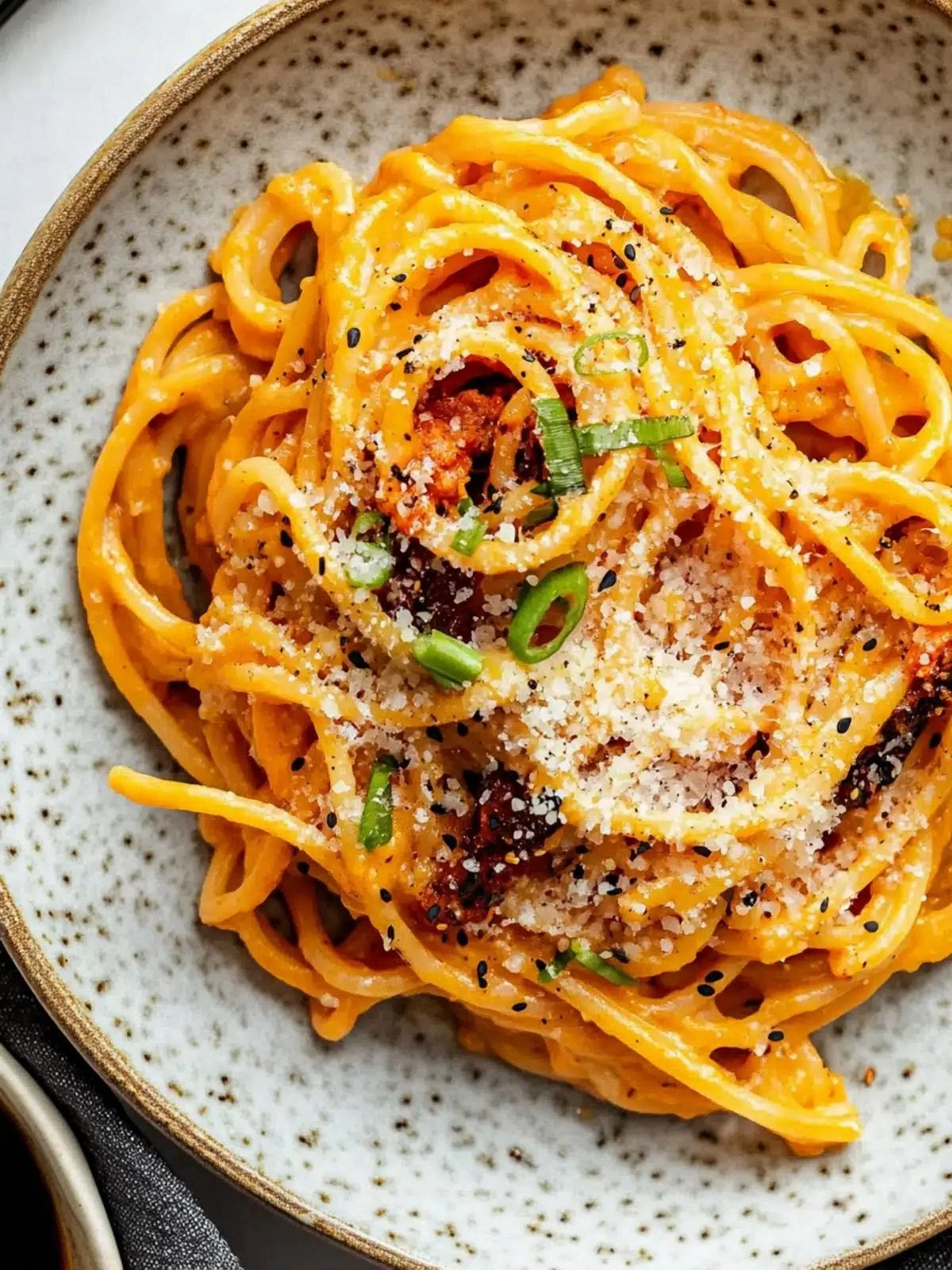
The first bite was a revelation: the sauce clung to the pasta like velvet, the heat from the gochujang dancing on the tongue, and the sharp, salty kick of pecorino romano cut through the richness. I could taste the subtle umami of the bacon, the bright zing of lemon zest, and the whisper of toasted sesame seeds that added a nutty crunch. The contrast between the creamy, slightly acidic sauce and the crispy bacon made every forkful an adventure. I was already planning the next plate when I realized this was more than just a recipe—it was a statement.
What makes this version stand out? It’s the fusion of classic Italian technique with Korean heat, the careful layering of textures, and a method that ensures the sauce never curdles. I’ve tested dozens of carbonara variations, and most of them either fall flat or end up too greasy. This one, however, balances everything perfectly. If you’ve ever struggled with a runny sauce or unevenly cooked pasta, this recipe is a game‑changer. The result is a dish that feels indulgent yet sophisticated, and trust me, it’s hands down the best version you’ll ever make at home.
I dare you to taste this and not go back for seconds. Imagine the first spoonful, the heat rising, the creamy coating, and then the crisp bacon giving that satisfying crunch. The secret? A few micro‑challenges that will have you reaching for the kitchen counter in no time. Stay with me here—this is worth it.
What Makes This Version Stand Out
- Flavor Fusion: The gochujang introduces a smoky heat that contrasts beautifully with the mild, creamy carbonara sauce, creating a dish that feels both familiar and daring.
- Texture Mastery: The thick, silky sauce clings to each strand of pasta while the bacon delivers a satisfying crunch that shatters like thin ice.
- Simple Yet Elegant: With only a handful of ingredients, the recipe keeps the kitchen clean, but the result feels like a gourmet experience.
- Ingredient Quality: Using thick‑cut bacon and fresh scallions elevates the dish, ensuring each bite is bursting with flavor.
- Make‑Ahead Friendly: The sauce can be prepared ahead and reheated without losing its silky texture, making it perfect for busy weeknights.
- Crowd‑Pleaser: The spicy twist is bold enough to excite adventurous eaters yet balanced enough for the whole family.
Alright, let's break down exactly what goes into this masterpiece…
Inside the Ingredient List
The Flavor Base
The cornerstone of any great carbonara is the sauce. In this version, we combine 2 large eggs and ¾ cup grated pecorino romano or parmesan cheese to create a custard‑like mixture that coats the pasta. The eggs provide richness and body, while the cheese adds depth and a salty tang that balances the heat from the gochujang. If you skip the cheese, the sauce will feel thin and lack the umami punch that makes carbonara unforgettable.
The gochujang, ranging from 2 to 3 tablespoons, is the star of the show. It brings a smoky, slightly sweet heat that is far more complex than plain red pepper flakes. If you can’t find gochujang, a blend of Korean chili paste and a touch of honey can mimic the flavor profile, but you’ll lose that distinct fermented depth.
The Texture Crew
Thick‑cut bacon, measured at 10 ounces, is the crunch factor. Cook it until it’s golden and slightly crisp; the fat renders out, leaving behind a savory, caramelized coating that sticks to the pasta. If you use regular bacon, you’ll end up with a greasy mess that dilutes the sauce.
Fresh scallions and toasted sesame seeds add layers of texture and a subtle nutty flavor. The scallions bring a fresh, mild onion bite that cuts through the richness, while the sesame seeds add a toasty crunch that lingers on the palate. Don’t skip these—they’re the finishing touches that elevate the dish.
The Unexpected Star
Lemon zest is the secret weapon that brightens the entire dish. The citrus oils lift the heaviness of the cheese and bacon, creating a balanced, vibrant flavor. If you’re in a pinch, a squeeze of fresh lemon juice will work, but zest provides a more concentrated burst of aroma.
The Final Flourish
Seasoning is critical. A teaspoon of kosher salt and ½ teaspoon of garlic powder lay the groundwork for flavor, while freshly ground black pepper adds a finishing heat that ties everything together. If you’re watching sodium, reduce the salt by half and let the bacon compensate. The pepper’s sharp bite is essential; without it, the dish feels flat.
Everything’s prepped? Good. Let’s get into the real action…
The Method — Step by Step
- Bring a large pot of salted water to a rolling boil. Add the 12 ounces of pasta and cook until al dente, about 9-10 minutes. Reserve 1 cup of pasta water before draining; it’s the key to a silky sauce.
- While the pasta cooks, heat a large skillet over medium heat. Add the thick‑cut bacon, cooking until it’s rendered and the edges are crisp. Remove from the skillet and let it rest on a paper towel to drain excess fat.
- In a mixing bowl, whisk together the eggs, grated cheese, gochujang, kosher salt, garlic powder, and freshly ground black pepper until smooth. The mixture should be thick enough to coat a spoon.
- Return the skillet to low heat and add a splash of reserved pasta water to deglaze, scraping up any browned bits. This step adds flavor and prevents the bacon fat from scorching.
- Add the drained pasta to the skillet, tossing to coat with the bacon fat and deglazed liquid. The pasta should be hot and shimmering.
- Remove the skillet from heat and pour the egg‑cheese mixture over the pasta, tossing vigorously. The residual heat will cook the eggs into a silky sauce without scrambling them.
- If the sauce seems too thick, gradually add more reserved pasta water, a tablespoon at a time, until you reach a creamy consistency that clings to each noodle.
- Fold in the crispy bacon, scallions, toasted sesame seeds, and lemon zest. The heat from the sauce will release the citrus oils, brightening the dish.
- Serve immediately, sprinkling extra cheese and black pepper if desired. The dish should feel rich, slightly spicy, and irresistibly creamy.
That's it — you did it. But hold on, I've got a few more tricks that'll take this to another level…
Insider Tricks for Flawless Results
The Temperature Rule Nobody Follows
The key to a silky sauce is low, steady heat. Once you pour the egg mixture, immediately remove the skillet from the burner. The residual heat will finish cooking the eggs without scrambling them. A friend once tried to keep the skillet on the stove and ended up with a lumpy mess—don’t make that mistake.
Why Your Nose Knows Best
Before adding the eggs, give the sauce a sniff. It should smell buttery, slightly sweet, and with a hint of fermented spice. If it smells off or too raw, let the sauce simmer for a minute longer to develop depth. Your nose is a reliable quality control.
The 5‑Minute Rest That Changes Everything
After tossing the pasta with the sauce, let it rest for 5 minutes off the heat. This resting period allows the starches to rehydrate and the flavors to meld, resulting in a more cohesive dish. I’ve found that dishes served immediately after cooking are often less harmonious.
The Perfect Bacon Texture
To achieve that crisp edge that shatters like thin ice, cook the bacon on medium‑high heat until the edges are browned but before the center is fully crisp. Flip halfway through to ensure even cooking. The result is a bacon that’s both crunchy and flavorful.
The Secret of Fresh Scallions
Slice the scallions thinly and separate the white from the green. Use the white for the initial sauté and the green for a fresh, bright finish. This layering adds depth and a pop of color that makes the dish visually appealing.
Creative Twists and Variations
This recipe is a playground. Here are some of my favorite ways to switch things up:
Spicy Mushroom Carbonara
Add sautéed shiitake mushrooms for an earthy depth that pairs wonderfully with the gochujang heat. The mushrooms also absorb the sauce, creating a richer bite.
Seafood Surprise
Swap the bacon for shrimp or scallops, cooking them in the same skillet. The seafood’s natural sweetness balances the spice and adds a luxurious texture.
Vegan Version
Use a plant‑based egg substitute and vegan parmesan. Replace the bacon with crispy tempeh or smoked tofu for a smoky, umami punch.
Pesto Infusion
Stir in a spoonful of basil pesto before adding the eggs. The herbaceous flavor adds freshness and a green hue, turning the dish into a vibrant feast.
Roasted Pepper Twist
Roast red bell peppers and blend them into the sauce for a sweet, smoky undertone that complements the gochujang’s heat.
Truffle Touch
Finish with a drizzle of truffle oil for an indulgent, earthy aroma that elevates the dish to a gourmet level.
Storing and Bringing It Back to Life
Fridge Storage
Store the finished dish in an airtight container for up to 2 days. The sauce will firm up slightly, so reheat gently with a splash of reserved pasta water to restore creaminess.
Freezer Friendly
Wrap the pasta tightly in foil and freeze for up to 1 month. When reheating, thaw in the refrigerator overnight and gently warm in a skillet with a little water to loosen the sauce.
Best Reheating Method
Reheat on low heat, stirring constantly, and add a teaspoon of water or milk to achieve the desired consistency. The key is to avoid boiling, which can separate the sauce.