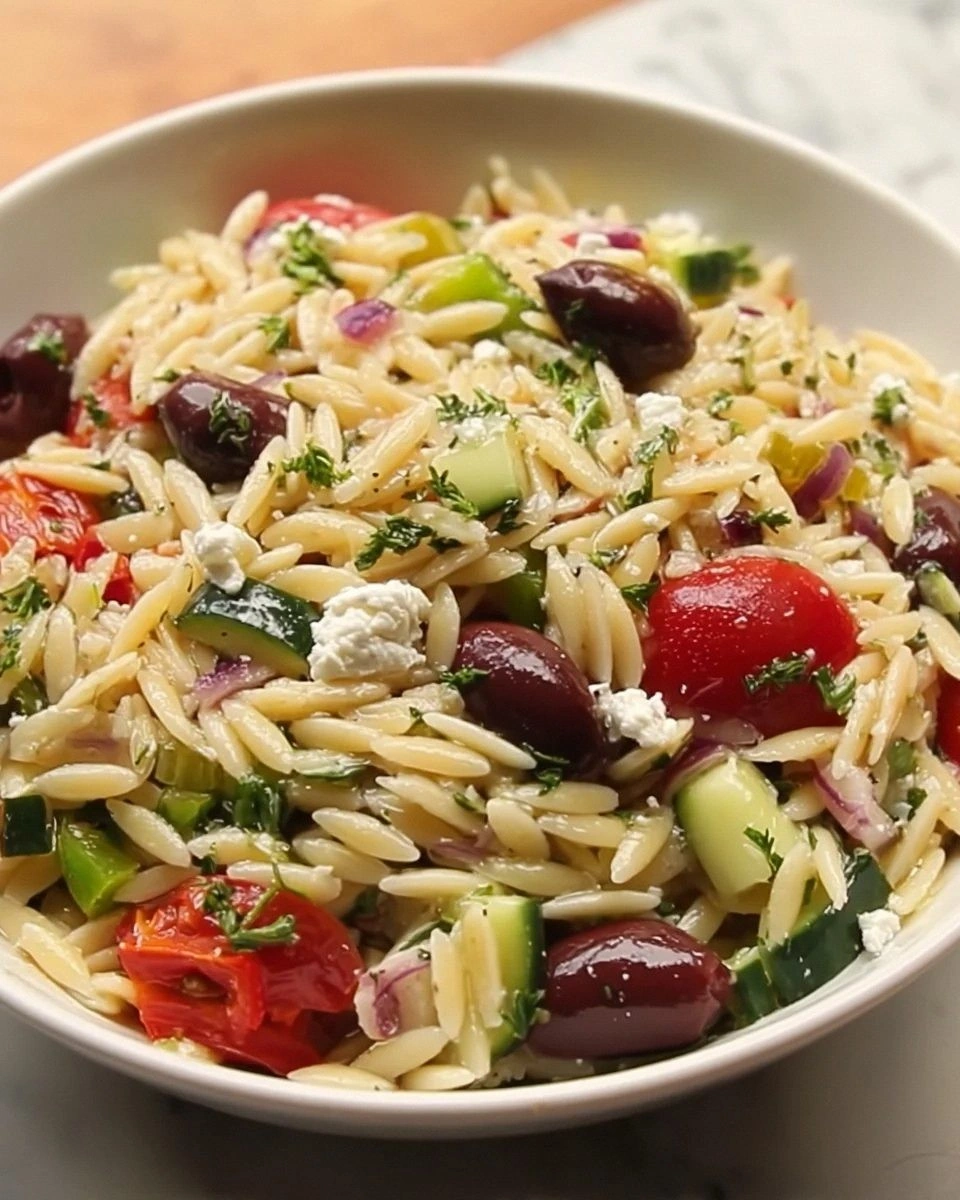
I still remember the day I set out to make a simple pasta salad for my neighbor's potluck, only to discover mid-recipe that my beloved rotini had vanished from the pantry. In its place sat a lonely bag of orzo, looking more like rice than pasta, daring me to improvise. What followed was a frantic raid through my fridge—leftover feta, a handful of cherry tomatoes, some Kalamata olives swimming in brine, and a half-used lemon. Thirty minutes later, I arrived at the party with this accidental Greek orzo masterpiece tucked under my arm, secretly hoping nobody would notice I'd deviated from the classic rotini route. Spoiler: they noticed, they devoured it, and three people cornered me for the recipe before dessert even hit the table. That chaotic afternoon turned into my most-requested dish ever since, and I dare you to taste this and not go back for seconds.
Picture yourself pulling this out of the fridge, the whole kitchen smelling like a sun-drenched taverna on the Aegean coast. The lemony vinaigrette clings to each tiny pasta grain like morning dew, while the feta melts ever so slightly into warm orzo, creating little pockets of creamy salt bombs. I’ll be honest—I ate half the batch before anyone else got to try it, standing over the counter with a fork in one hand and a guilty grin on my face. Most recipes get this completely wrong: they drown the orzo in dressing, toss in soggy vegetables, and serve it ice-cold straight from the fridge. That approach turns your beautiful salad into a bland, watery mess that tastes like yesterday’s leftovers. Here’s what actually works.
This is hands down the best version you’ll ever make at home, and it comes down to three tiny tweaks: salting the pasta water like the Mediterranean Sea, letting the orzo cool just enough so it doesn’t murder the fresh herbs, and whisking the dressing in the bottom of the bowl first so every ingredient gets a glossy coat of lemon-herb magic. Stay with me here—this is worth it. Okay, ready for the game-changer? We’re going to fold in a secret spoonful of the olive brine for an extra savory punch that makes people close their eyes and sigh, “What is that amazing flavor?” Let me walk you through every single step—by the end, you’ll wonder how you ever made it any other way.
What Makes This Version Stand Out
- Sunset-Fresh Flavor: The combination of ripe tomatoes, crisp cucumbers, and briny olives tastes like summer bottled up, even in the dead of winter.
- Pasta That Pops: Orzo’s rice-shaped curves trap dressing in every crevice, so you get a burst of lemon-herb brightness in every single bite.
- Zero Mayo, All Zing: A punchy red-wine vinaigrette keeps things light and picnic-safe, no refrigeration anxiety required.
- Make-Ahead Hero: The flavors meld overnight, turning an already great salad into a next-day legend that tastes even better.
- Texture Tango: Creamy feta, crunchy peppers, and chewy pasta create a playful contrast that keeps your fork moving on autopilot.
- One-Bowl Wonder: Everything happens in a single mixing bowl, meaning fewer dishes and more time for sneaky mid-prep snacking.
- Flexitarian Friendly: Add chickpeas for protein, swap in gluten-free orzo, or toss in grilled shrimp—this recipe bends but never breaks.
Alright, let’s break down exactly what goes into this masterpiece...
Inside the Ingredient List
The Flavor Base
Orzo is the star, but only if you treat it right. Choose a bronze-cut variety if you can find it—the rough surface grabs dressing like Velcro. Boil it in aggressively salted water; remember, the pasta is the only chance to season the grains themselves. Skimp here and the whole salad tastes flat, no matter how punchy your vinaigrette is. Drain it a minute shy of al dente because it will absorb dressing and soften further as it sits.
Extra-virgin olive oil should smell grassy and peppery, never greasy or rancid. If your oil doesn’t make you cough slightly when you sniff the bottle, it’s past its prime and will deliver dull, waxy flavor. Spend an extra dollar on a Greek or Cretan brand; the terroir matters more than marketing claims. And please, don’t reach for the “light” version—it’s stripped of the very compounds that make olive oil taste alive.
The Texture Crew
Cherry tomatoes bring candy-like bursts of juice, but only if they’re at room temperature. Refrigerated tomatoes taste metallic and watery, so pull them out an hour before chopping. Halve them with a serrated knife to avoid squishing precious seeds everywhere. If you can find the smaller Sun Gold variety, grab them—their honeyed sweetness balances the salty feta like a dream.
English cucumbers stay crisp longer than the standard waxy kind, thanks to their minimal seeds and thin skin. Leave the peel on for color and fiber; just give the cucumber a quick scrub. Dice small enough to fit on a fork alongside the orzo, but not so tiny they disappear into mush. Sprinkle with a pinch of salt after cutting; it draws out excess water, preventing a soggy salad.
The Unexpected Star
Kalamata olives are traditional, but have you ever tried mixing in a few fruity green Castelvetrano? Their buttery flesh softens the salty punch, creating a layered olive profile that keeps tasters guessing. Always buy olives with the pits still in—pre-pitted ones trade flavor for convenience and often taste tinny. Pit them yourself with the flat side of a chef’s knife; it takes ninety seconds and the payoff is huge.
Feta in brine beats every other form, hands down. The salty bath keeps the cheese crumbly yet creamy, never rubbery. Avoid the pre-crumbled stuff; it’s coated with anti-caking powder that dulls flavor and creates a chalky mouthfeel. Buy a solid block, store it submerged in its own brine, and cube or crumble right before serving for maximum sparkle.
The Final Flourish
Fresh oregano is a revelation if you’ve only tasted the dried flakes. The leaves are fuzzy, fragrant, and carry a bright, almost citrusy punch. Strip them from woody stems, then gently bruise between your fingers to release oils just before sprinkling. If fresh is out of reach, use dried sparingly—about one-third the amount—and bloom it in the warm orzo for a minute to wake up the flavor.
Red wine vinegar adds sharpness, but a fifty-fifty blend with lemon juice creates a more complex high note. The lemon’s essential oils ride on top, announcing freshness, while the vinegar sneaks in behind with mellow tang. Whisk them together with the garlic and a pinch of salt first; the acid mellows raw allium heat and saves your guests from dragon breath.
Everything’s prepped? Good. Let’s get into the real action...
The Method — Step by Step
- Bring a large pot of water to a rolling boil and salt it until it tastes like the Aegean Sea—about 1 tablespoon of kosher salt per quart. The water should foam and billow steam that smells faintly of ocean mist. Pour in 8 oz (about 1 ½ cups) dry orzo and stir for the first thirty seconds to prevent sticking. Set a timer for 7 minutes, but start tasting at 6; you want a firm bite with a tiny white core in the center.
- While the pasta dances, whisk together 3 tablespoons red wine vinegar, 2 tablespoons fresh lemon juice, 1 finely minced garlic clove, 1 teaspoon dried oregano, ½ teaspoon salt, and a few grinds of black pepper in the bottom of your largest mixing bowl. The acid will tame the garlic’s sting and bloom the dried herb, releasing a heady perfume that smells like a Greek marketplace at dawn. Let this mixture sit undisturbed; it’s the flavor engine of your entire salad.
- Slow drizzle in ⅓ cup extra-virgin olive oil while whisking constantly to create a thick, glossy emulsion. The dressing should coat the back of a spoon and leave visible streaks when you run a finger through it. If it separates, keep whisking; the vinaigrette will come together like a shy couple at their first dance, tentative then perfectly synchronized.
- Drain the orzo in a colander, but don’t you dare rinse it—that starch helps dressing cling. Immediately tip the hot pasta into the bowl with the vinaigrette and toss gently with a rubber spatula. The residual heat opens the pasta’s pores, letting the lemon-herb bath seep deep inside each grain. You’ll hear a soft sizzle as the hot pasta meets the acid; that’s flavor being locked in.
- Spread the dressed orzo in a shallow layer on a baking sheet and let it cool for 10 minutes. This quick chill stops the cooking and evaporates excess moisture, preventing that dreaded gluey texture later. Stir once halfway so the bottom doesn’t steam. Your kitchen will smell like lemon groves and sun-warmed earth, a preview of the flavor symphony to come.
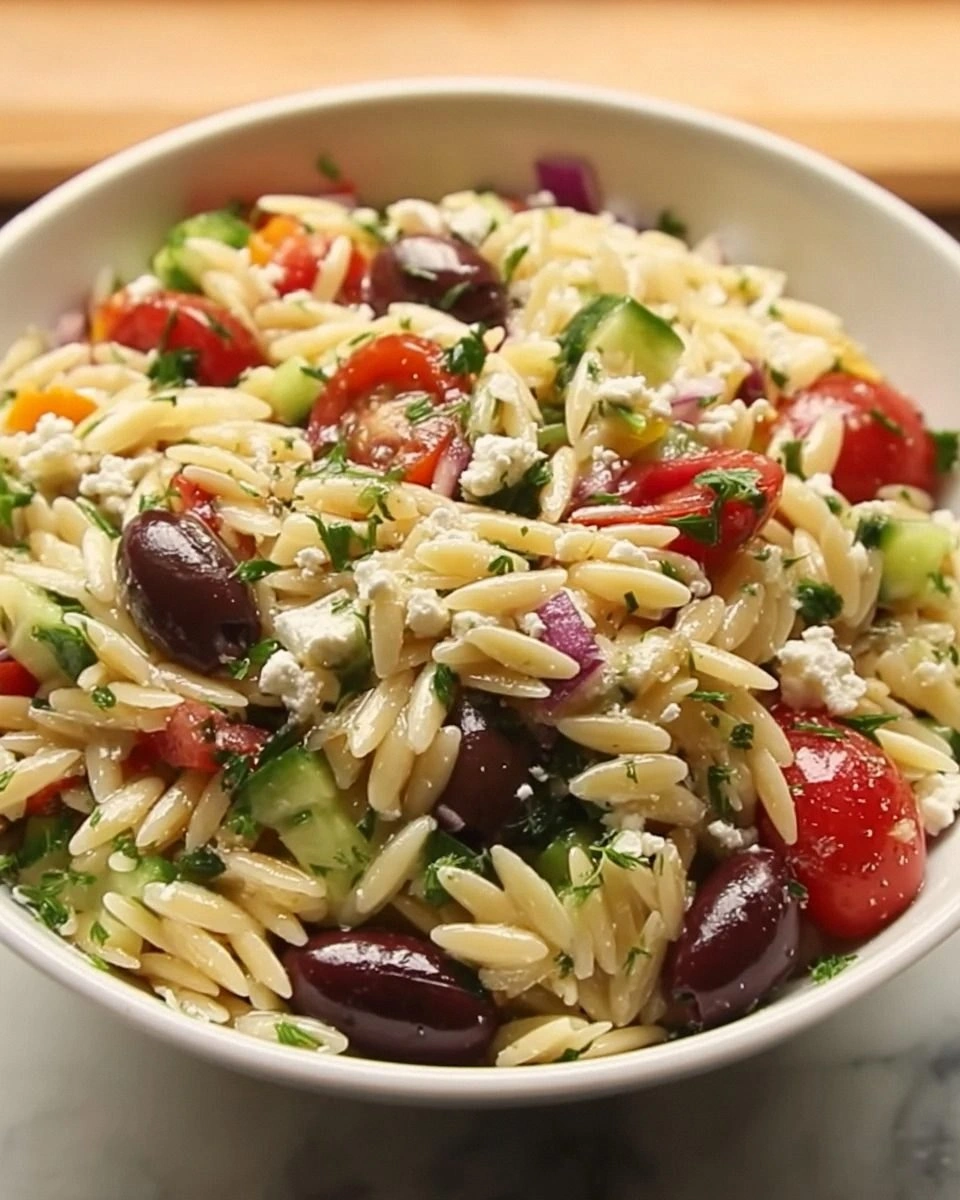
- While the orzo cools, prep your vegetables. Halve 1 pint cherry tomatoes, dice 1 cup cucumber into half-moons, thinly slice ¼ red onion, and pit ½ cup Kalamata olives. Keep everything bite-sized; the goal is to fit three different components on a single fork without looking like a circus act. Sprinkle the tomatoes with a pinch of sugar to amplify their natural sweetness against the salty olives.
- Add the vegetables to the cooled orzo along with ½ cup crumbled feta and 2 tablespoons chopped fresh parsley. Fold with a gentle lifting motion, like you’re tucking in a sleeping child, until everything is streaked with dressing. Take a taste; the flavor should shout bright, briny, and fresh. If it whispers, add another squeeze of lemon or pinch of salt.
- Cover the bowl with plastic wrap pressed directly onto the surface to prevent a skin from forming. Refrigerate at least 30 minutes so flavors marry, or up to overnight if you’re prepping ahead. During this rest, the orzo drinks in the dressing, tomatoes release sweet juice, and feta softens into tiny savory clouds. Bring it back to cool room temperature before serving for maximum flavor.
- Just before serving, fold in 1 tablespoon chopped fresh oregano and a final drizzle of olive oil for glossy sheen. Taste once more and adjust salt, pepper, or acid. Transfer to a wide, shallow bowl so every ingredient is visible—this salad is too pretty to hide in a deep dish. Scatter a few extra feta crumbles on top like snowfall, then step back and watch the crowd swarm.
That's it—you did it. But hold on, I've got a few more tricks that'll take this to another level...
Insider Tricks for Flawless Results
The Temperature Rule Nobody Follows
Serve this salad cool, not ice-cold. Refrigeration dulls flavors and tightens olive oil, so let the bowl sit on the counter for 15 minutes before digging in. The difference is night and day: herbs wake up, tomatoes regain their perfume, and the feta softens to spreadable decadence. A friend tried skipping this step once—let’s just say it didn’t end well, and I had to eat lukewarm leftovers for days.
Why Your Nose Knows Best
Before serving, hold the bowl at waist height and take a big inhale. You should smell lemon first, then oregano, then a faint briny whisper from the olives. If any one aroma dominates, adjust: more lemon for brightness, a pinch of salt to amplify everything, or a drizzle of oil to carry the scent. This quick sniff test saves you from serving a one-note salad and makes you look like a culinary wizard.
The 5-Minute Rest That Changes Everything
After folding in fresh herbs, walk away for five minutes. This brief pause allows volatile oils to settle and distribute evenly, so every bite tastes harmonious instead of herby in one spot and bland in another. Use the time to set out plates, open wine, or sneak a preview forkful. When you return, the salad will taste like it’s been chilling in a Greek grandma’s fridge for generations.
Creative Twists and Variations
This recipe is a playground. Here are some of my favorite ways to switch things up:
Santorini Sunset
Swap cherry tomatoes for blistered yellow and red baby heirlooms, still warm from the skillet. Add a handful of capers and replace the parsley with fresh dill. The result tastes like watching the famous blue-domed sunset, each bite glowing sweet and salty.
Athenian Protein Punch
Fold in a cup of canned chickpeas, rinsed and crisped under the broiler for 10 minutes with a drizzle of oil and pinch of smoked paprika. The smoky legumes turn the side dish into a hearty vegetarian main that even carnivores hoard.
Island Tuna Taverna
Flake in a can of good-quality oil-packed tuna, drained but not rinsed. Add diced roasted red peppers and a fistful of arugula for peppery bite. Suddenly you’ve got a lazy seaside lunch worthy of a whitewashed taverna table.
Spicy Mykonos
Thinly slice one small fresh chili and toss it in with the vegetables. Use peppery arugula instead of parsley and finish with a squeeze of blood orange. The gentle heat sneaks up like a Mykonos nightclub—fun, fiery, and impossible to forget.
Winter Comfort
Roast cubes of butternut squash with cinnamon and fold them in while still warm. Substitute sage for oregano and toasted pumpkin seeds for crunch. It’s autumn in a bowl, brightened by the same lemony backbone.
Storing and Bringing It Back to Life
Fridge Storage
Transfer leftovers to an airtight container and press plastic wrap directly on the surface to prevent oxidation. The salad keeps up to 4 days, though flavors peak at day 2. Store any extra feta separately and sprinkle on just before serving so it stays perky.
Freezer Friendly
Skip the freezer for this one; cucumbers and tomatoes collapse into sad, icy shards upon thawing. If you must, freeze just the dressed orzo and add fresh vegetables after defrosting overnight in the fridge. Texture will differ, but the flavor still trumps store-bought.
Best Reheating Method
This salad is designed to be served cool, but if you’re salvaging leftovers, let them sit at room temp for 20 minutes. If it still feels tight, revive with a splash of lemon juice and a drizzle of olive oil, then toss vigorously to re-emulsify. Add a handful of fresh herbs to fake that just-made magic.