I still remember the first time I attempted to make oxtails. It was a rainy Tuesday, the kind that makes you want to cancel all obligations and hibernate under a blanket with something bubbling on the stove. I'd bought these gorgeous, meaty hunks of tail on a whim—partly because they were on sale, mostly because I'd been dreaming about my grandmother's version for weeks. Fast forward three hours and my kitchen looked like a crime scene: splattered sauce on every surface, smoke alarm wailing because I'd cranked the heat too high in impatience, and me standing there with a wooden spoon like some tragic Shakespearean character wondering how something so simple could go so wrong. The oxtails? Tough as shoe leather and about as flavorful. I ate them anyway, stubbornly chewing through disappointment while plotting my redemption arc.
That failure became an obsession. I spent the next month testing, tweaking, and yes, occasionally ruining more batches of oxtails than I care to admit. I tried every method under the sun—pressure cookers, slow cookers, oven braising, even considered rigging up some kind of sous-vide contraption with my cooler. But here's what nobody tells you about oxtails: they're divas. They demand patience, yes, but more importantly, they demand respect. Rush them and they'll punish you with rubbery meat and greasy broth. Treat them right and they'll reward you with something that'll make you want to cancel dinner plans just to hover over the pot, "tasting" every five minutes.
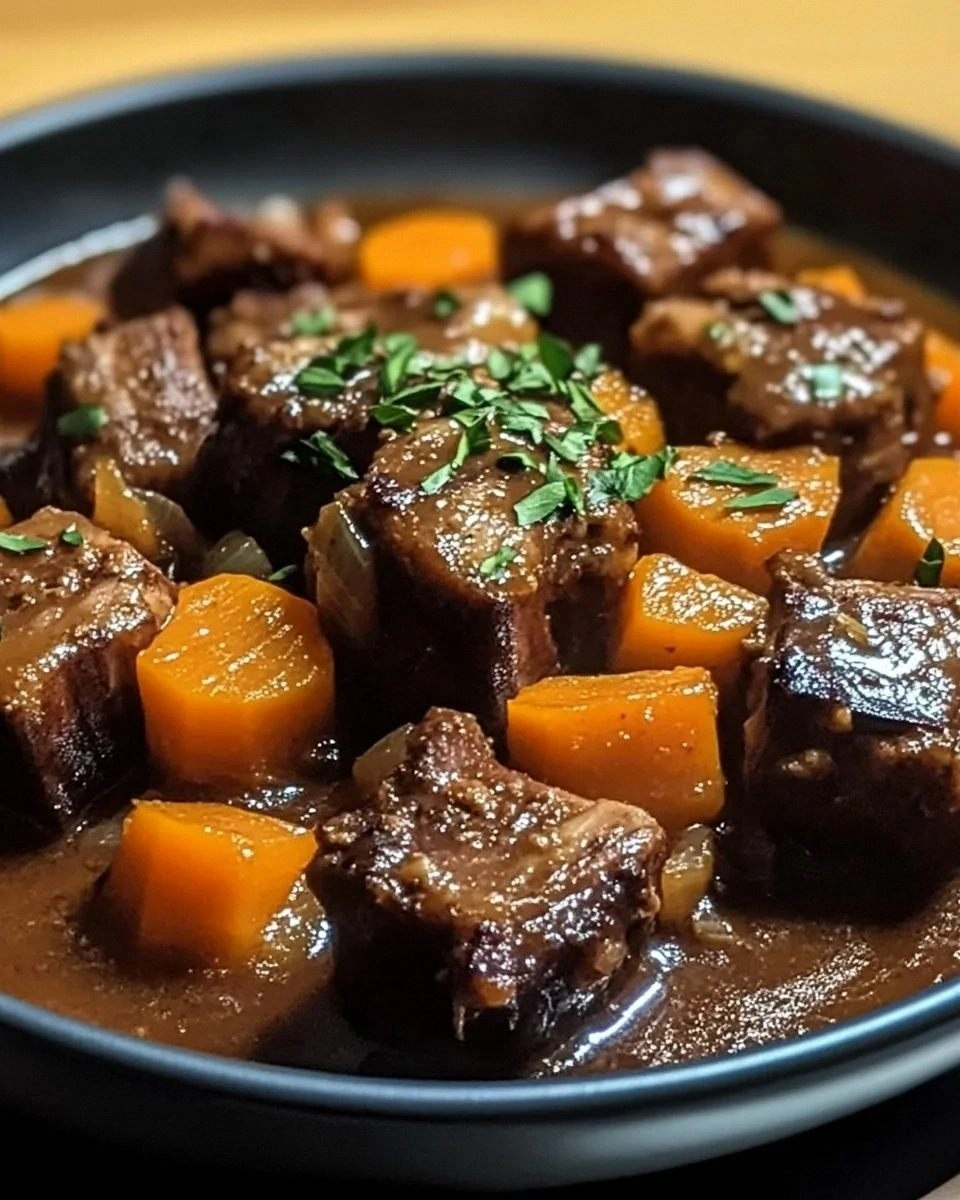
This stovetop version I'm sharing today? It's the result of that delicious obsession. No fancy equipment, no seventeen-hour cooking marathon, no mysterious ingredients you need to special order from some artisanal butcher who only works Tuesdays during a full moon. Just honest technique, a few smart shortcuts, and the kind of deep, soul-warming flavor that makes people close their eyes involuntarily when they take the first bite. The sauce is so rich and glossy it practically glows, the meat falls off the bone with the gentlest nudge of your fork, and the vegetables have absorbed all that beefy magnificence until they're more like little flavor bombs than mere sidekicks.
But here's the real kicker—this recipe is actually simple. I know, I know, everyone claims their recipe is simple while asking you to brine things for 48 hours or source ingredients from three different continents. I'm talking genuinely weeknight-friendly simple, assuming your weeknight allows for some quality time with a good podcast and a glass of wine while the magic happens. The kind of simple that'll make you wonder why you ever thought oxtails were intimidating. Let me walk you through every single step—by the end, you'll wonder how you ever made it any other way.
What Makes This Version Stand Out
- Foolproof Technique: Most recipes throw everything in a pot and hope for the best. This method builds flavor layer by layer, starting with a proper sear that creates the foundation for everything that follows. Each step has a purpose, each ingredient gets its moment to shine.
- Time-Tested Shortcuts: I've cracked the code on getting fork-tender meat in under three hours without sacrificing an ounce of flavor. The secret? A two-stage cooking process that breaks down collagen efficiently while keeping the meat juicy and succulent.
- Restaurant-Quality Sauce: The braising liquid transforms into a glossy, spoon-coating sauce that tastes like it simmered all day. It's got that magical quality of being both light enough to sip like soup and rich enough to make you want to bathe in it.
- Budget-Friendly Luxury: Oxtails used to be the cheap cut nobody wanted. Now they're trendy, but they're still a fraction of the cost of prime rib or short ribs. This recipe makes them feel like the most luxurious thing on earth.
- One-Pot Wonder: Everything happens in a single heavy pot—no transferring between vessels, no extra pans for side components. Your future self doing dishes will thank you profusely.
- Make-Ahead Magic: This actually gets better overnight. Make it Sunday, reheat gently on Tuesday, and you'll swear someone snuck into your kitchen and improved it while you slept.
- Crowd-Pleasing Power: I've served this to picky toddlers, food-snob friends, and my Italian neighbor who swears her nonna's version is unbeatable. They all ask for seconds. They all ask for the recipe. You'll see.
Inside the Ingredient List
The Flavor Foundation
Oxtails are the star here, obviously, but not all oxtails are created equal. Look for pieces that are meaty and well-marbled, about 2-3 inches thick. The fat is your friend—it renders down and creates that luscious mouthfeel that makes this dish so irresistible. If your butcher only has scrawny pieces, ask them to cut you some fresh ones or check back in a few days. Trust me, waiting for good oxtails is always worth it. They should smell fresh and clean, never gamey or sour, with a deep red color that promises rich flavor ahead.
The Aromatics Army
Onions, carrots, and celery form the holy trinity here, but I like to add a few unconventional recruits to the mix. A couple of parsnips bring subtle sweetness that plays beautifully with the beef, while a single leek adds a gentle onion complexity that regular onions can't achieve alone. Garlic gets added at two different stages—some at the beginning for that deep, roasted flavor, and more near the end for bright, sharp notes that wake up the whole dish. Fresh thyme and bay leaves are non-negotiable, but I also sneak in a sprig of rosemary for piney perfume that makes the whole kitchen smell like a Tuscan grandmother's kitchen.
The Liquid Gold
Here's where most recipes go wrong—they use plain water or canned broth and wonder why their oxtails taste flat. We're building our own liquid gold here, starting with good beef stock (homemade if you're feeling ambitious, but let's be real, quality store-bought works too). A splash of red wine adds acidity that helps break down the meat while contributing fruity complexity. But the secret weapon? A tablespoon of tomato paste, cooked until it turns a deep brick red. It adds umami depth and helps thicken the sauce naturally without any floury taste.
The Flavor Amplifiers
Worcestershire sauce brings that mysterious tangy-sweet note that makes people ask "what's in this?" in the best way possible. A single anchovy fillet melts completely into the sauce, adding incredible depth without any fishy taste—it's like MSG but natural and way more interesting. Smoked paprika contributes gentle heat and that campfire aroma that makes everything taste like it was kissed by fire. And here's my controversial addition: a teaspoon of honey. Not enough to make it sweet, just enough to round out all the aggressive flavors and make them sing in harmony.
Everything's prepped? Good. Let's get into the real action...
The Method — Step by Step
- The Sear That Changes Everything: Pat your oxtails absolutely dry with paper towels—moisture is the enemy of good browning. Heat a heavy-bottomed pot (I use my trusty Dutch oven) over medium-high heat until a drop of water dances across the surface. Add just enough oil to film the bottom, then carefully lay in the oxtails, fat-side down first. Don't crowd them; work in batches if necessary. That sizzle when they hit the pan? Absolute perfection. Let them develop a deep mahogany crust, about 4-5 minutes per side. This isn't just about color—those browned bits (fond) are pure flavor crystals that'll dissolve into your sauce later.
- The Great Vegetable Soften: Remove the oxtails to a plate, reduce heat to medium, and immediately add your diced onions, carrots, celery, and parsnips to the rendered fat. The vegetables will start releasing their moisture, helping you scrape up all those beautiful browned bits from the bottom. This is called deglazing, and it's where the magic begins. Cook until the vegetables are softened and starting to caramelize around the edges, about 8-10 minutes. Your kitchen should smell like the best Sunday dinner you've ever had. Add the tomato paste here and cook for another 2 minutes, stirring constantly, until it turns a deep brick red and smells slightly sweet.
- The Alcohol Addition: Pour in your red wine—something you'd actually drink, please, none of that "cooking wine" nonsense. It should sizzle dramatically and immediately start smelling like you've stepped into a French bistro. Let it bubble away for about 3 minutes, scraping up any remaining fond from the bottom. The alcohol burns off, leaving behind all the wine's fruity complexity and enough acidity to help tenderize the meat. If you've ever wondered why restaurant sauces taste more complex than home versions, this step is usually the answer.
- The Liquid Gold Pour: Now add your beef stock, but here's the trick—only add enough to come about ¾ of the way up the oxtails. They shouldn't be swimming; they should be relaxing in a warm bath. Too much liquid and you'll dilute all your carefully built flavors. Add your Worcestershire sauce, anchovy, honey, and all your herbs. Give everything a gentle stir, but don't go crazy—you want those vegetables to stay intact. The liquid should look rich and promising, like it's already halfway to being the best gravy you've ever tasted.
- The Long Simmer: Bring everything to a gentle simmer—not a rolling boil, just lazy bubbles breaking the surface every few seconds. Reduce heat to low, cover with a tight-fitting lid, and walk away. Seriously, walk away. Check in every 30 minutes to ensure it's maintaining that gentle simmer, but otherwise, let time do its thing. After about 90 minutes, the meat should be getting tender but not quite fall-off-the-bone yet. This is when I like to add my second round of garlic—crushed cloves that'll perfume the whole pot without overwhelming the other flavors.
- The Great Uncovering: After 2 hours total, remove the lid and let the sauce reduce. This is where it transforms from thin broth to glossy, coating sauce. The surface should shimmer with tiny droplets of rendered fat—this is good, don't skim it all off! That fat carries flavor and helps the sauce cling to the meat. Continue simmering uncovered for another 30-45 minutes, until the sauce has reduced by about one-third and coats the back of a spoon. The oxtails should be incredibly tender, threatening to fall apart if you look at them too hard.
- The Final Flourish: Taste your sauce now—really taste it. It should be rich but not heavy, beefy but not one-dimensional. This is when you adjust: a splash more Worcestershire for depth, a pinch of salt to wake everything up, maybe a squeeze of lemon for brightness. Remove the herb stems and bay leaves (they've done their duty). The sauce should be glossy enough to make you want to take a photo, but not so thick it feels heavy. If it's too thin, simmer a bit longer. Too thick? A splash of stock loosens it perfectly.
- The Rest That Makes Legends: Turn off the heat and let everything rest for 10 minutes. I know you're hungry, I know it smells incredible, but this rest allows the meat to reabsorb some of the juices and the sauce to settle. Plus, it gives you time to cook some rice or egg noodles, warm some crusty bread, or just pour yourself another glass of that wine. The oxtails will stay hot in the covered pot for a good 20 minutes, so don't stress about timing everything perfectly.
That's it—you did it. But hold on, I've got a few more tricks that'll take this to another level...
Insider Tricks for Flawless Results
The Temperature Rule Nobody Follows
Here's the thing about braising: everyone focuses on time, but temperature is the real key. Your liquid should maintain a temperature between 180-190°F (82-88°C)—hot enough to break down collagen but gentle enough to keep the meat from seizing up and turning tough. How do you know if it's right? The surface should shimmer with tiny bubbles that barely break the surface, like a lazy hot spring. If it's bubbling like a jacuzzi, it's too hot. If it's completely still, it's too cool. I keep an instant-read thermometer handy and check after the first 30 minutes, then adjust as needed.
Why Your Nose Knows Best
Your sense of smell is your most underused cooking tool here. When the oxtails are almost done, your kitchen should smell like the best beef stew you've ever encountered, with sweet notes from the vegetables and a hint of wine. If it smells flat or one-dimensional, you need more acid (a splash of wine or vinegar). If it smells sharp or harsh, it needs more time to mellow. Trust your instincts—if it smells good, it'll taste good. This might sound like kitchen voodoo, but after you've made this a few times, you'll start recognizing these aroma signatures like old friends.
The 5-Minute Rest That Changes Everything
I mentioned resting earlier, but let me elaborate because this is where good oxtails become legendary. After cooking, the meat fibers are swollen with hot juices. If you cut into them immediately, all those juices flood out onto the plate, leaving you with dry meat and a puddle. Letting them rest for just 5-10 minutes gives the fibers time to relax and reabsorb some of that moisture. Cover the pot with the lid slightly ajar so steam can escape but heat stays in. This is also when the sauce thickens slightly as it cools, achieving that perfect coating consistency.
The Skimming Secret
You'll notice fat pooling on the surface as the sauce reduces. Some fat is good—it carries flavor and helps the sauce coat your tongue—but too much makes it greasy. Here's the professional trick: don't skim while it's hot. Let it settle for a few minutes, then use a wide spoon to gently push the fat to one side and lift it off. The fat will have congealed slightly, making it easier to remove without taking precious sauce with it. Alternatively, make this a day ahead and refrigerate overnight—the fat solidifies on top and lifts off in satisfying sheets.
The Reheating Revelation
Oxtails reheat beautifully, but there's a right and wrong way. Never microwave them—it makes the meat tough and the sauce separates. Instead, place them in a pot with a splash of stock or water, cover, and warm gently over low heat. They'll taste exactly like they did when you first made them, maybe even better. If the sauce seems thin after reheating, just simmer uncovered for a few minutes to reduce again. This is why I always make a double batch—future me gets to feel like a kitchen genius with zero effort.
Creative Twists and Variations
This recipe is a playground. Here are some of my favorite ways to switch things up:
The Caribbean Queen
Swap the red wine for dark rum, add a scotch bonnet pepper (whole, so you can remove it), and throw in some allspice berries and fresh thyme. The result is fiery, fragrant, and tastes like a beach vacation in a bowl. Serve with rice and peas, and prepare for your house to smell like a Jamaican grandmother's kitchen. I dare you to taste this and not go back for seconds.
The French Bistro Version
Add a bouquet garni (parsley stems, thyme, bay leaf tied together), swap the honey for a teaspoon of brown sugar, and finish with a knob of butter for extra richness. Serve over buttered egg noodles with a side of crusty baguette. Suddenly you're in a tiny Parisian bistro, even if you're actually in your studio apartment eating over the sink. Sometimes I add some pearl onions in the last 30 minutes—they absorb all that beefy goodness and burst like savory grapes in your mouth.
The Korean Fusion
Replace the Worcestershire with soy sauce, add a piece of kombu (dried kelp) to the braising liquid, and finish with a sprinkle of gochugaru (Korean chili flakes) for gentle heat. The umami bomb is incredible—deep, complex, and slightly addictive. I like to serve this with kimchi on the side and some steamed rice to soak up all that incredible sauce. My Korean neighbor tried this version and now refuses to make oxtails any other way.
The Italian Nonna
Add a parmesan rind to the pot (save those rinds!), swap the red wine for white, and throw in some chopped tomatoes. Finish with fresh basil and serve over creamy polenta. It's like osso buco's rustic cousin—equally delicious but way less fancy. The parmesan rind melts into the sauce, adding incredible depth and body. I'll be honest—I ate half the batch before anyone else got to try it when I first made this version.
The Spicy Southern Belle
Add a tablespoon of tomato paste with some chipotle peppers in adobo sauce, swap the honey for molasses, and finish with a splash of bourbon. Serve with cornbread and collard greens. It's got that sweet-heat thing going on that makes you want to keep eating even when you're full. The bourbon adds a vanilla-caramel note that plays beautifully with the smoky chipotle. Picture yourself pulling this out of the oven, the whole kitchen smelling incredible...
The Clean-Out-The-Fridge Version
Got some sad vegetables languishing in your crisper? Throw them in. Fennel fronds? They add a subtle licorice note that's surprisingly good. Turnips instead of parsnips? Go for it. This recipe is incredibly forgiving—as long as you have the oxtails, wine, stock, and aromatics, everything else is negotiable. Some of my best batches have been born from desperation and questionable produce.
Storing and Bringing It Back to Life
Fridge Storage
Let the oxtails cool completely before storing—hot meat in cold containers is a recipe for condensation and soggy sauce. Transfer to airtight containers with some of the sauce covering the meat completely (this prevents drying). They'll keep for up to 4 days in the refrigerator, though I guarantee they won't last that long. The sauce will thicken considerably when cold—this is normal and actually makes it easier to remove excess fat. Just reheat gently with a splash of stock or water to loosen it back up.
Freezer Friendly
Oxtails freeze beautifully for up to 3 months. I like to freeze individual portions in freezer bags with the air pressed out—they thaw faster and you can grab just what you need. Pro tip: freeze the sauce separately in ice cube trays, then transfer to a bag. You can pop out exactly how much you need for reheating or for adding richness to other dishes. Frozen oxtail sauce is liquid gold—I use it to amp up soups, stews, even pasta sauces. Thaw overnight in the refrigerator for best results, though you can quick-thaw in cold water if you're impatient.
Best Reheating Method
Low and slow is the name of the game here. Place oxtails in a pot with a splash of water or stock, cover, and warm over the lowest heat possible. If they seem dry, add more liquid gradually—you can always reduce it again. For larger portions, I sometimes reheat them covered in a 300°F oven for 30-40 minutes, which heats them evenly without drying out the meat. Microwave is the enemy of good texture here, so resist the urge even when you're starving. Most recipes get this completely wrong. Here's what actually works: patience and gentle heat.