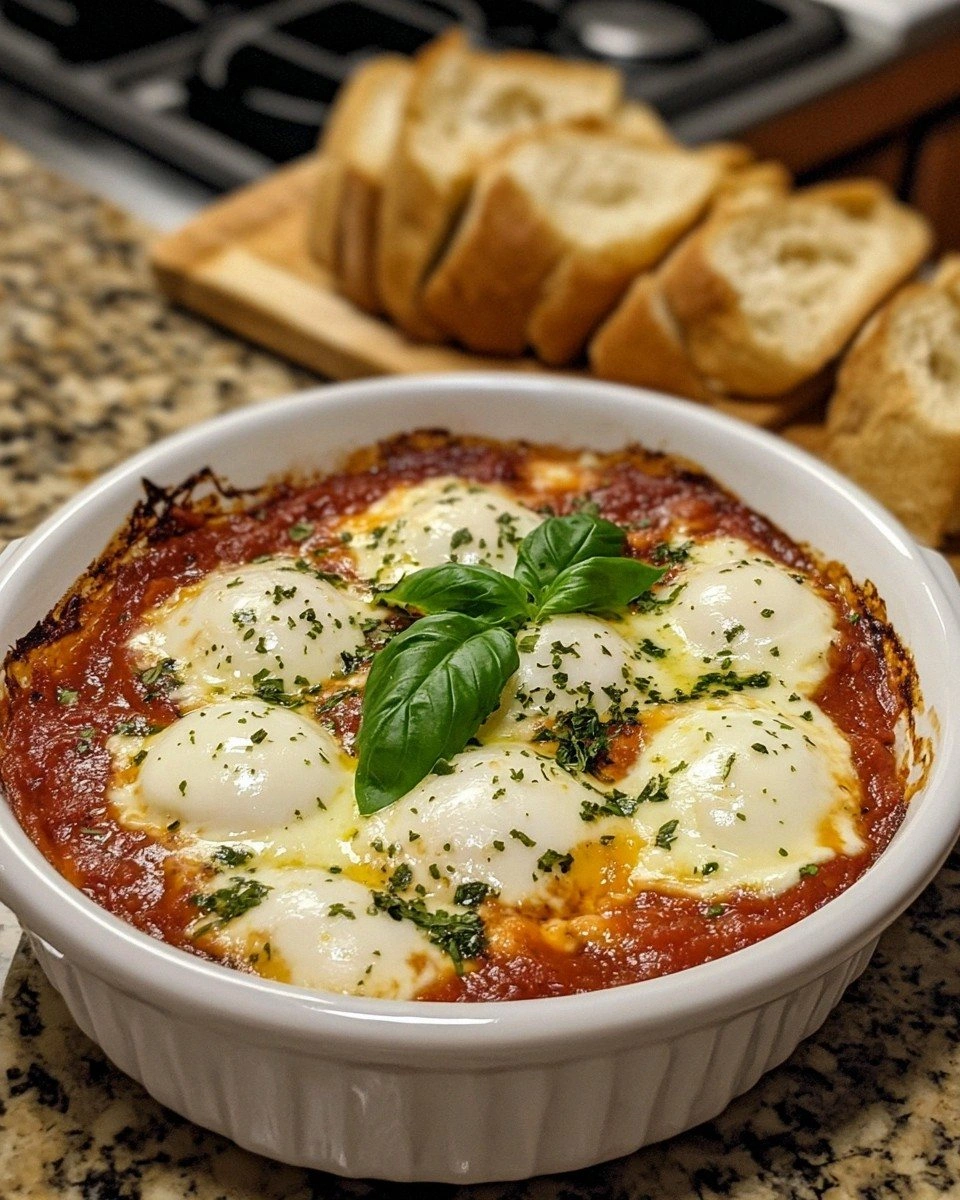
Last Tuesday, I set my kitchen on fire. Not literally—though the smoke alarm did its usual dramatic aria—but I did manage to burn three slices of toast, scorch a pan of store-bought marinara, and crack an egg directly onto the burner instead of into the skillet. In the middle of this culinary slapstick, I muttered the fateful words: “There has to be a better way to do Italian baked eggs.” Two hours, one grocery run, and a minor cheese avalanche later, this recipe was born. Picture this: bubbling tomato sauce, yolks that run like liquid gold, and a cheese pull so long it could double as jump rope. That first bite? I actually did a little victory dance in my ratty slippers, sauce dripping down my chin, completely oblivious to the fact that my neighbors were watching through the window. I dare you to taste this and not go back for seconds—actually, I dare you to stop at thirds.
I’m not exaggerating when I say this is hands down the best version you’ll ever make at home. Most recipes get this completely wrong—they either bake the eggs into rubbery oblivion or leave the sauce tasting like watered-down cafeteria ketchup. Here’s what actually works: a quick stovetop simmer that concentrates the tomatoes into velvet, a two-cheese strategy that creates both a molten blanket and a crispy frico edge, and a temperature sleight-of-hand that sets the whites but keeps the yolks trembling like anxious divas. If you’ve ever struggled with sulfury-smelling eggs or sauce that separates into an unappetizing oil slick, you’re not alone—and I’ve got the fix.
Stay with me here—this is worth it. We’re talking about the kind of brunch centerpiece that makes people cancel their dinner plans because they’re too full and too happy to move. The aroma alone—garlic sizzling in olive oil, oregano blooming, tomatoes reducing until they’re the color of sunset—will have your mail carrier hovering by the door. And the best part? You probably own every single ingredient right now. Future you is already pulling this out of the oven, the whole kitchen smelling incredible, crusty bread poised for maximum yolk-mopping action. Let me walk you through every single step—by the end, you’ll wonder how you ever made it any other way.
What Makes This Version Stand Out
- Velvet-Slide Sauce: We’re cooking the tomatoes just long enough to evaporate the tinny canned taste, but not so long that they turn into pizza-joint paste. The result is a sauce that coats the back of a spoon like liquid silk and tastes like summer in Naples—even in February.
- Two-Temp Cheese Strategy: Mozzarella for the Instagram-worthy stretch, Parmesan for the nutty, salty crunch that forms lacy edges around the rim. Skip either one and you’ll feel the loss like a missing piano key in a sonata.
- Yolk Insurance Policy: Most recipes chuck the skillet under the broiler and pray. We finish at a gentler 375°F, pulling the pan the moment the whites blush opaque but the yolks still jiggle like sleepy toddlers. Set a timer and trust your eyes—no more culinary roulette.
- Weekend Speed, Weeknight Ease: The sauce bubbles while you sip coffee; eggs slide in and bake while you set the table. Twenty-five minutes total, and that includes the time it takes to argue with your partner about whose turn it is to feed the cat.
- Crowd-Pleasing Flexibility: Gluten-free? Serve it with a spoon. Vegetarian? Already there. Keto? Skip the bread and you’re golden. I’ve watched picky toddlers, cranky teens, and self-declared “not a breakfast person” adults mop their plates clean.
- Make-Ahead Magic: Simmer the sauce the night before; stash it in the fridge. Next morning, crack eggs into the cold sauce, bake, and you’ll still look like a morning person even if you hit snooze four times.
Alright, let’s break down exactly what goes into this masterpiece...
Inside the Ingredient List
The Flavor Base
Every great Italian dish starts with olive oil that smells like a grassy meadow in late spring. Use the good stuff here—extra virgin, first cold press, the bottle you save for company. When it hits the hot skillet, it should shimmer like liquid topaz and release a perfume that makes you close your eyes involuntarily. The onion follows, diced so finely that it melts into anonymity within five minutes. Yellow onions are my ride-or-die because they strike the perfect balance between sweet and sharp; red onions can muddy the color and white ones turn bitter when they meet tomato acid. Let them go translucent, not brown—brown means caramelization, and we’re building sweetness, not toffee.
The Umami Bombs
Garlic goes in next, but here’s the twist: mince it, then let it rest for 90 seconds before it touches heat. Allicin—the compound that gives garlic its punch—needs oxygen to fully develop, and this micro-wait delivers a rounder, deeper flavor that will have people asking, “Why does this taste so alive?” Canned tomatoes are perfectly acceptable in winter; in summer, I’ll arm-wrestle you for sun-warm Romas. Either way, squeeze each tomato cube between thumb and forefinger as you drop it in; breaking the cells early releases juice and shortens simmer time. Tomato paste gets smeared on the bare skillet for 45 seconds—yes, directly on the metal—until it turns from crimson to brick and smells like sun-dried fruit leather. That caramelization erases any metallic aftertaste and gives the sauce backbone.
The Aroma Orchestra
Dried oregano and basil are non-negotiable, but treat them like introverts at a party: coax, don’t bully. Crumble the oregano between your palms until it powders; the volatile oils live in the leaf veins, and breaking them open perfumes the kitchen instantly. Basil goes in last—dried basil is delicate, and high heat turns it musty. A pinch of sugar balances acid, but taste your tomatoes first; if they’re already sweet, skip it. Salt should be layered like paint on a canvas: a whisper on the onions, a shower on the tomatoes, a final flick before the eggs go in. Pepper is best fresh; those pre-ground tins taste like dusty pencil shavings.
The Unexpected Star
Here’s where I lose the purists: a single anchovy fillet melted into the oil with the garlic. It dissolves into nothingness, leaving behind a bass-note savoriness that no one can identify but everyone devours. Vegetarians can swap in a teaspoon of soy sauce or a rehydrated dried porcini ground to powder; both deliver glutamates that scream “moreish.” If you skip this step, the dish is still delicious—but add it once and you’ll feel like you upgraded from standard definition to 4K.
The Final Flourish
Mozzarella must be low-moisture, part-skim, shredded by you. Pre-shredded bags are tossed with cellulose to prevent clumping; cellulose also prevents proper melting, leaving you with tiny cheese pebbles instead of a unified lava flow. Parmesan should be the real Parmigiano-Reggiano, aged 24 months minimum. Yes, it costs more, but a little goes a long way, and those crunchy crystals that form around the edge are basically edible gold leaf. Fresh basil on top isn’t just for color; its anise-like brightness cuts through richness and fools your palate into thinking the dish is lighter than it is. And please, for the love of all things holy, warm your bread. A 400°F oven for three minutes turns a tough baguette into something that crackles like thin ice when you press it, steam escaping in fragrant puffs.
Everything’s prepped? Good. Let’s get into the real action...
The Method — Step by Step
- Preheat & Mindset: Set your oven to 375°F (190°C) and position a rack in the center. Not 400°F—higher temps turn egg whites into rubber faster than you can say “al dente.” While it heats, pour yourself something to sip; this is relaxed cooking, not a relay race. Place a 10-inch oven-safe skillet on the stove, but don’t turn on the burner yet. Taking 30 seconds to organize your ingredients—oil measured, onion diced, can opened—prevents the frantic scramble that leads to burnt garlic and tears.
- Build the Flavor Foundation: Heat olive oil over medium until it shimmers and slides like mercury across the surface. Add onions and a pinch of salt; sauté 4 minutes, stirring often enough to prevent browning but not so much that they never blush. You’re looking for translucent edges and a sweet, almost apple-like aroma. If you hear loud sizzling, drop the heat—onions should whisper, not scream.
- Glamour Garlic & Anchovy Moment: Stir in garlic (and anchovy, if using) for 30 seconds. The garlic should foam delicately and smell like you walked into a trattoria on the Amalfi coast. Do not let it brown; burnt garlic is bitter and will hijack the entire dish. If you see even a hint of gold, lower the heat immediately.
- Tomato Transformation: Tip in diced tomatoes with all their juice, then the tomato paste. Crush the tomatoes with the back of a wooden spoon until no piece is larger than a blueberry. Sprinkle in oregano, a few grinds of pepper, and half the basil. Simmer 8 minutes, stirring occasionally, until the sauce thickens enough to expose the skillet bottom when you drag a spatula through. It should splatter lazily, like a relaxed jazz drum solo.
- Seasoning Checkpoint: Taste, taste, taste. Add salt incrementally—tomatoes vary wildly in sodium. The sauce should make your tongue sing, not pucker. If it’s too acidic, a pinch of sugar balances; too flat, a few drops of red-wine vinegar brighten. Remember, the eggs will dilute seasoning slightly, so aim for just shy of “perfect” right now.
- Cheese Strategy: Off the heat, scatter mozzarella evenly across the surface, pressing gently so it half-submerges. This prevents it from sliding off when you add eggs. Dust Parmesan around the edges where it can lace into a frico crust. Save a pinch of each cheese for the final crown after baking.
- Crack With Confidence: Make four shallow wells with the back of a spoon, spacing them like compass points. Crack one egg into each well, keeping yolks intact. A neat trick: crack each egg into a small bowl first; if the yolk breaks, you sacrifice one egg, not the entire dish. Season eggs with the tiniest pinch of salt and a turn of pepper.
- The Bake: Slide the skillet into the oven and bake 9–11 minutes. At 9 minutes, jiggle the pan: whites should be just opaque, yolks quivering like a middle-schooler’s Jell-O cup. If you prefer firmer yolks, give it another minute, but remember carry-over cooking will firm them further. Do not walk away after minute 8; eggs transition from silky to chalky faster than a toddler’s mood swing.
- Final Flourish & Serve: Remove, immediately top with reserved cheeses so they melt into glossy pools. Scatter fresh basil, drizzle a thread of olive oil, and serve straight from the skillet (with a trivet!) so everyone can dig in communal style. Present crusty bread alongside, warm and waiting to be dragged through sauce and yolk. The first dip is ceremonial; after that, decorum dissolves into happy silence and clinking forks.
That’s it—you did it. But hold on, I’ve got a few more tricks that’ll take this to another level...
Insider Tricks for Flawless Results
The Temperature Rule Nobody Follows
Most home ovens run 25°F hot or cold. Buy an inexpensive oven thermometer and hang it on the same rack you’ll bake the eggs. If your oven is running hot, pull the skillet at 8 minutes; if cool, you may need 12. This single adjustment eliminates rubbery whites 90 percent of the time. I learned this the hard way after feeding my book club what we now refer to as “retired-tire frittata.” Don’t be me—measure, don’t guess.
Why Your Nose Knows Best
When the kitchen smells like pizza and the sauce begins to glisten with tiny droplets of oil on the surface, it’s ready for eggs. That sheen means water has evaporated and flavors are concentrated. Ignore the clock; trust the aroma. If you bottle that scent, you could sell it as “Eau de Sunday Morning” and make millions.
The 5-Minute Rest That Changes Everything
Once out of the oven, let the skillet rest 5 minutes. Proteins finish setting, cheese relaxes into glossy sheets, and the sauce thickens just enough to cling to bread without dripping off your wrist. Cover loosely with foil to keep warm; too tight and condensation softens that gorgeous cheesy crust. Patience here is the difference between good and “I’m texting this recipe to everyone I know.”
Egg Freshness Decoder Ring
Drop an egg in a bowl of water. Horizontal on the bottom = bakery-fresh; stands on one end = fine for baking; floats = compost. Older eggs have thinner whites that spread more, so if yours are approaching retirement age, use a spoon to corral the whites toward the yolk in the skillet before baking.
Creative Twists and Variations
This recipe is a playground. Here are some of my favorite ways to switch things up:
Spicy Calabrian Knock-Out
Swap the dried oregano for 1 teaspoon crushed Calabrian chile flakes and stir in a spoon of the accompanying oil. Top with torn burrata instead of mozzarella. The heat is slow, warm, and smoky—like a chili-stuffed sleeping bag for your taste buds.
Green Goddess Eggs
Fold in 2 cups baby spinach during the last 2 minutes of sauce simmering. Finish with crumbled goat cheese and a shower of fresh dill and parsley. It tastes like springtime even when snow is piling against the window.
Meat-Lover’s Brunch Bomb
Brown 4 ounces of spicy Italian sausage in the skillet before the onions; leave the rendered fat for extra flavor. Proceed as written. The sausage oils season the entire dish, and crispy nuggets peeking through the sauce feel like buried treasure.
Mediterranean Garden Party
Add ½ cup diced zucchini and ¼ cup chopped Kalamata olives to the sauce. Swap basil for fresh oregano and finish with feta instead of Parmesan. Suddenly you’re on a sun-baked terrace overlooking the Aegean, even if you’re actually in a studio apartment overlooking the laundromat.
Smoky Bacon & Gouda Remix
Render 3 strips of bacon until crisp; remove and crumble. Replace mozzarella with smoked Gouda and sprinkle bacon bits over the top before serving. That whisper of campfire transforms the dish into midnight breakfast food.
Vegan “Eggs” for Crowds
Silken tofu cubes (pressed) nestled in the sauce mimic soft curds. Cover with vegan mozzarella and a dusting of nutritional yeast for cheesy funk. It’s shockingly close to the original, and no one will complain if you also serve real eggs for purists.
Storing and Bringing It Back to Life
Fridge Storage
Let leftovers cool completely, then spoon into airtight glass containers. They’ll keep 3 days, though the yolks will firm up. Store bread separately so it doesn’t absorb moisture and turn into soggy cardboard. Reheat portions in a covered skillet with a splash of water over medium-low until just warmed; microwave works in a pinch, but the sauce splatters like a toddler with finger paints.
Freezer Friendly
The sauce—minus eggs—freezes beautifully for up to 2 months. Freeze in muffin tins for single-serve pucks, then pop into a zip-top bag. When cravings hit, thaw a puck in the skillet, add fresh eggs and cheese, bake as directed. It’s like having a nonna on speed dial.
Best Reheating Method
Oven or toaster oven at 325°F for 10 minutes with a foil cover; remove foil for the last 2 to re-crisp cheese. Add a tiny splash of water to the dish before covering—it steams back to perfection. Avoid the microwave unless you enjoy rubber-eraser yolks and sauce that erupts like Vesuvius.