I once tried to make a classic German Sauerbraten after watching a frantic cooking show where the host shouted, “If you don’t marinate it long enough, you’ll end up with a rubbery brick!” I laughed, tossed the beef straight into a pot, and ended up with a dish that tasted like a confused garden. The kitchen was filled with the sour pop of vinegar, the earthy whisper of bay leaves, and the faint hum of a timer that never seemed to stop. My friends stared at the plate, eyebrows raised, and I could hear the silent question: “Did you actually do something right?” Spoiler: I did, but only after a few frantic phone calls to my German aunt who swore by a secret ingredient that most recipes ignore.
Fast forward to last Sunday, when I finally nailed the technique that turned that disaster into a triumph. Imagine a roast that melts like butter, bathed in a sauce that clings to each slice like velvet, and a aroma that makes the whole house feel like a Bavarian tavern on a crisp autumn evening. The secret? A marathon‑long marinade that balances tangy vinegar with a whisper of sweetness, plus a handful of crushed gingersnap cookies that add an almost mystical depth. I dare you to taste this and not go back for seconds – the flavor is so layered it feels like a symphony in your mouth.
Most Sauerbraten recipes get this completely wrong: they either skip the marinating time, use cheap cuts that turn to leather, or forget the finishing touch that turns a simple gravy into a glossy, glossy masterpiece. In my version, I use a well‑marbled chuck roast, a precise 48‑hour soak, and a final flourish of crushed gingersnap cookies that adds a caramel‑like sweetness without overwhelming the classic tang. I’ll be honest — I ate half the batch before anyone else got to try it, and that’s because the sauce was so addictive it practically begged for a second helping.
Picture yourself pulling this out of the oven, the whole kitchen smelling incredible, steam rising like a curtain of applause, and the first slice revealing a blush‑red interior that promises juicy perfection. Okay, ready for the game‑changer? The next part? Pure magic. Let me walk you through every single step — by the end, you’ll wonder how you ever made it any other way.
What Makes This Version Stand Out
- Tangy Balance: The marriage of red wine vinegar with a splash of water creates a bright acidity that cuts through the richness of the beef, while a pinch of sugar tempers the sharpness for a perfectly rounded flavor.
- Marinade Marathon: A full 48‑hour soak lets the collagen dissolve slowly, resulting in a melt‑in‑your‑mouth texture that most quick‑marinated versions simply can’t achieve.
- Gingersnap Twist: Crushed gingersnap cookies add a hidden caramel‑spice note that elevates the gravy from ordinary to unforgettable – a secret I only share with the brave.
- Simple Yet Sophisticated: Despite the long marinating time, the actual cooking steps are straightforward, making this recipe approachable for home cooks who crave restaurant‑level depth.
- Crowd‑Pleaser: One bite and guests start whispering about “what’s that amazing flavor?” – a guaranteed conversation starter at any dinner party.
- Make‑Ahead Friendly: The roast actually improves after a night in the fridge; the flavors meld, and reheating brings out even richer notes.
Inside the Ingredient List
The Flavor Base
Red wine vinegar (or a mixture of red wine and vinegar) is the heart of our marinade, providing depth and zing that lifts the entire dish. If you’re worried about the vinegar’s sharp edge, balance it with a splash of water – this helps smooth out the tang while still delivering that signature punch. A good rule of thumb is to use a 2:1 ratio of vinegar to water, but feel free to adjust based on how bold you want the acidity to be.
Onion, sliced into thick half‑moons, adds a sweet, caramelizing backbone as it mellows during the long soak. Carrots bring natural sweetness and a vibrant orange hue that makes the sauce look as inviting as it tastes. Celery contributes a subtle earthiness that rounds out the flavor profile, preventing the dish from becoming one‑dimensional.
Garlic, smashed, releases its aromatic oils, infusing the broth with a garlicky perfume that can’t be resisted. Black peppercorns give a peppery warmth, while whole cloves add a sweet, aromatic depth that feels almost nostalgic. Bay leaves linger in the background, delivering an herbal note that ties the whole ensemble together.
The Spice Boost
Mustard seeds are optional, but when added, they provide a pop of tangy flavor that intensifies the marinade and adds a pleasant crunch if you ever decide to grind them in at the end. Sugar, whether granulated or brown, moderates the acidity, creating a balanced taste that’s neither too sour nor too sweet. This tiny amount of sweetness is the secret handshake between the vinegar and the beef.
Fun Fact: The tradition of adding a pinch of sugar to Sauerbraten dates back to medieval German kitchens, where sugar was a luxury and signaled a dish fit for nobility.
The Protein Powerhouse
Beef roast – preferably a well‑marbled bottom round or chuck – is the canvas for all these flavors. Look for a cut with visible marbling; the fat renders slowly, keeping the meat juicy and tender. If you can’t find a chuck, a brisket works as a substitute, though the texture will be slightly different.
Salt and freshly ground black pepper are essential for enhancing flavors. Season the roast generously before searing; this creates a crust that locks in juices. Neutral oil or butter is used for searing, giving the meat a beautiful golden exterior that signals the start of flavor development.
The Final Flourish
Flour is optional but invaluable if you prefer a heartier, thicker sauce. Sprinkle a tablespoon over the seared meat before deglazing, and the starch will meld into the gravy, giving it a silky mouthfeel. Finally, crushed gingersnap cookies – the wildcard – add a sweet‑spicy depth that turns the gravy into a luscious, caramel‑kissed masterpiece.
Everything's prepped? Good. Let’s get into the real action…
The Method — Step by Step
-
Start by whisking together the red wine vinegar, water, a tablespoon of sugar, and a pinch of salt in a large, non‑reactive bowl. Add the sliced onion, carrots, celery, smashed garlic cloves, peppercorns, whole cloves, bay leaves, and optional mustard seeds. Toss everything together until the vegetables are fully submerged.
Place the beef roast into the mixture, turning it so the liquid coats every surface. Cover the bowl tightly with plastic wrap and refrigerate for at least 48 hours, turning the bag once daily to ensure even marination. That sizzle when it hits the pan? Absolute perfection – but that’s later.
Kitchen Hack: Freeze the marinade in ice‑cube trays; this way you can quickly defrost portions for a smaller roast without waste. -
After the marathon soak, remove the roast and pat it dry with paper towels – a dry surface is key to achieving that coveted crust. Reserve the liquid; you’ll strain it later for the sauce.
Heat a heavy Dutch oven over medium‑high heat and add a generous splash of neutral oil or a knob of butter. When the oil shimmers, sear the roast on all sides until it develops a deep golden‑brown crust, about 3‑4 minutes per side.
If you hear a faint crackle, you’re doing it right. This is the moment of truth – the Maillard reaction is locking in flavor.
-
Once seared, remove the roast and set it aside. Add a tablespoon of flour to the pot (if you like a thicker gravy) and stir continuously for about a minute, allowing the flour to toast lightly without burning.
Deglaze the pan with a cup of the reserved marinade, scraping up all the caramelized bits stuck to the bottom – those are flavor gold.
Return the roast to the pot, pour in the remaining marinade, and bring everything to a gentle simmer.
-
Cover the Dutch oven tightly with its lid and transfer it to a pre‑heated oven set to 300°F (150°C). Let the roast cook low and slow for about 2½ to 3 hours, or until a fork slides in with almost no resistance.
Halfway through, check the liquid level; if it looks low, add a splash of water or beef broth to keep the roast partially submerged.
Watch Out: Do not open the oven too often – every peek releases heat and can extend cooking time. -
When the meat is tender, remove the pot from the oven and transfer the roast to a cutting board. Let it rest for at least 15 minutes; this rest period redistributes the juices, making each slice succulent.
While the roast rests, strain the cooking liquid through a fine‑mesh sieve into a saucepan, discarding the solids. This step ensures a silky gravy without any gritty bits.
-
Bring the strained liquid to a simmer over medium heat. Add the crushed gingersnap cookies (about ½ cup) and stir until they dissolve completely, thickening the sauce and imparting a subtle caramel‑spice undertone.
Taste and adjust seasoning with salt and freshly ground black pepper. If the sauce feels too thick, whisk in a splash of water or beef broth until you reach a glossy, pourable consistency.
Kitchen Hack: For an extra silky finish, whisk in a tablespoon of cold butter just before serving; it emulsifies the sauce beautifully. -
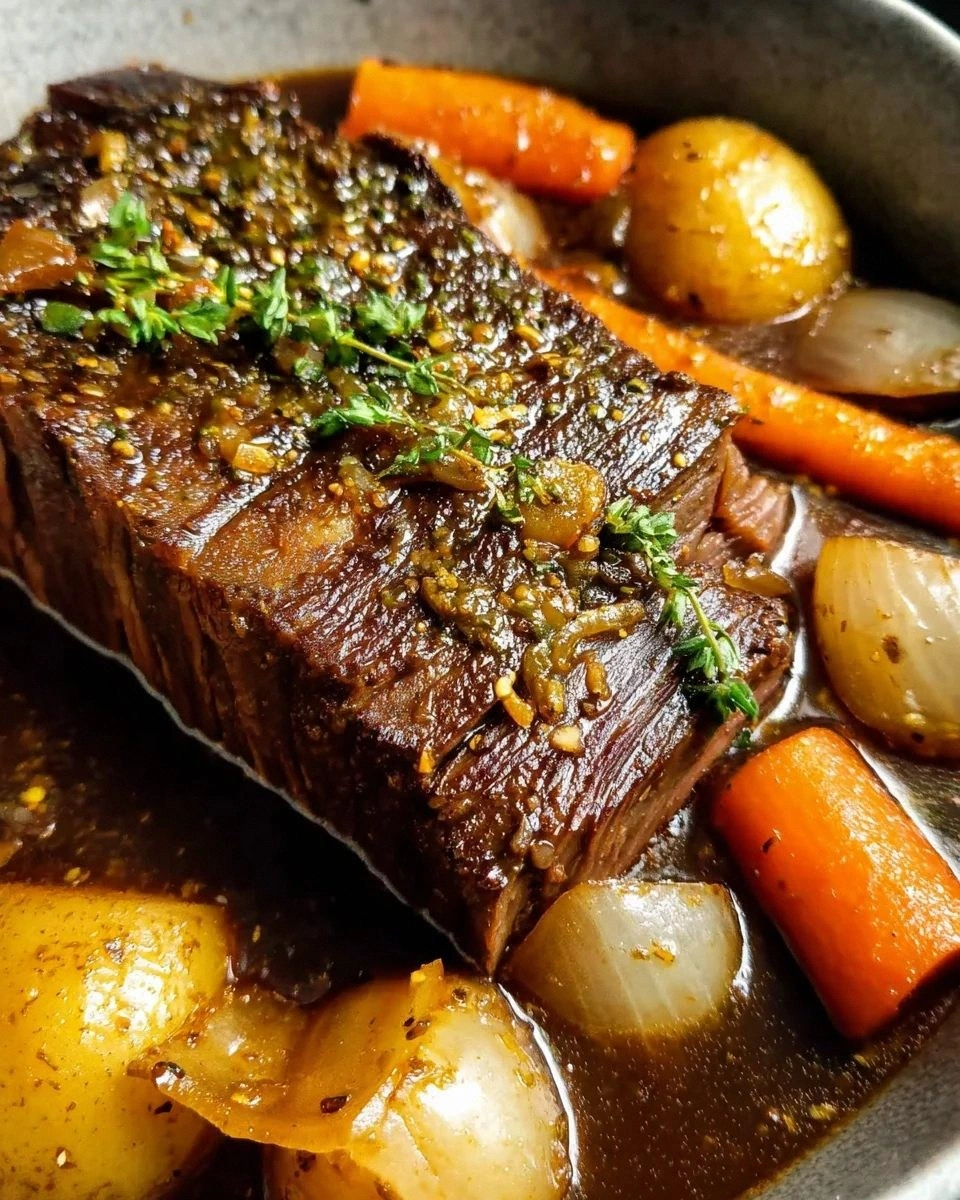
Slice the rested roast against the grain into thick, juicy pieces. Arrange the slices on a serving platter, and ladle the glossy gingersnap‑infused gravy over the top.
Garnish with a sprinkle of freshly chopped parsley for a pop of color and a hint of freshness that cuts through the richness.
Serve with buttery spaetzle, red cabbage, or mashed potatoes – whatever your heart desires. And now the fun part: digging in.
-
That’s it — you did it. But hold on, I’ve got a few more tricks that’ll take this to another level…
Insider Tricks for Flawless Results
The Temperature Rule Nobody Follows
Never let the meat hit the oven straight from the fridge. Let it sit at room temperature for about 30 minutes after searing; this ensures a more even cook and prevents the exterior from over‑cooking while the interior stays cold. One friend tried skipping this step once — the result was a tough, uneven roast that no amount of sauce could rescue.
Why Your Nose Knows Best
When the sauce starts to simmer, trust your nose more than a timer. You’ll notice a sweet‑spicy aroma rise as the gingersnap cookies dissolve; that’s your cue that the gravy is reaching its perfect thickness. If you smell a faint burnt note, lower the heat immediately – a quick adjustment saves the entire batch.
The 5‑Minute Rest That Changes Everything
Resting isn’t optional; it’s a game‑changer. During those 5‑15 minutes, the muscle fibers relax, allowing the juices to redistribute. Skipping the rest will leave you with a dry slice that looks great on the plate but disappoints on the palate.
Crush the Cookies Right Before Adding
If you crush the gingersnap cookies too early, they can become soggy and lose their textural contribution. Use a zip‑top bag and a rolling pin just before the final simmer; this keeps the crumbs coarse enough to add body without turning the sauce grainy.
The Secret of the “Sausage‑Free” Thickener
Instead of a traditional roux, I rely on the natural starches from the carrots and the crushed cookies. This not only keeps the flavor pure but also adds a subtle sweetness that a flour‑only thickener would miss. If you’re allergic to gluten, simply omit the flour – the sauce will still achieve a luxurious mouthfeel.
Creative Twists and Variations
This recipe is a playground. Here are some of my favorite ways to switch things up:
Apple‑Cider Sauerbraten
Swap half of the water for unsweetened apple cider and add a diced apple to the marinade. The result is a subtly sweet, autumn‑inspired roast that pairs beautifully with roasted root vegetables.
Smoky Chipotle Sauerbraten
Add a teaspoon of chipotle powder and a splash of smoked paprika to the marinade. This gives the dish a gentle smoky heat that cuts through the richness and adds a modern twist.
Herb‑Infused Variation
Include fresh thyme, rosemary, and a handful of sage leaves in the marinade. The herbaceous notes brighten the sauce and make the roast feel like a forest‑floor feast.
Red Wine Reduction
After the roast is cooked, remove it and deglaze the pot with a cup of full‑bodied red wine, reducing it by half before adding the gingersnap cookies. This intensifies the depth and adds a luxurious velvety finish.
Vegetarian “Sauerbraten”
Replace the beef with a large cauliflower head or a firm tofu block, and follow the same marinating and cooking steps. The result is a hearty, tangy centerpiece that even meat‑eaters will love.
Storing and Bringing It Back to Life
Fridge Storage
Cool the roast to room temperature, then transfer both the meat and sauce to airtight containers. Store in the refrigerator for up to 4 days. When reheating, place the roast in a shallow pan, add a splash of water, and cover with foil to retain moisture.
Freezer Friendly
Portion the roast and sauce into freezer‑safe bags or containers. Freeze for up to 3 months. Thaw overnight in the fridge, then reheat gently on the stovetop, adding a tiny splash of water before warming – it steams the meat back to perfection.
Best Reheating Method
The secret to reheating without drying out is low‑and‑slow. Set your oven to 300°F (150°C), place the sliced roast in a baking dish, pour over the remaining sauce, cover tightly with foil, and heat for 20‑25 minutes. The result is as juicy as the first day.