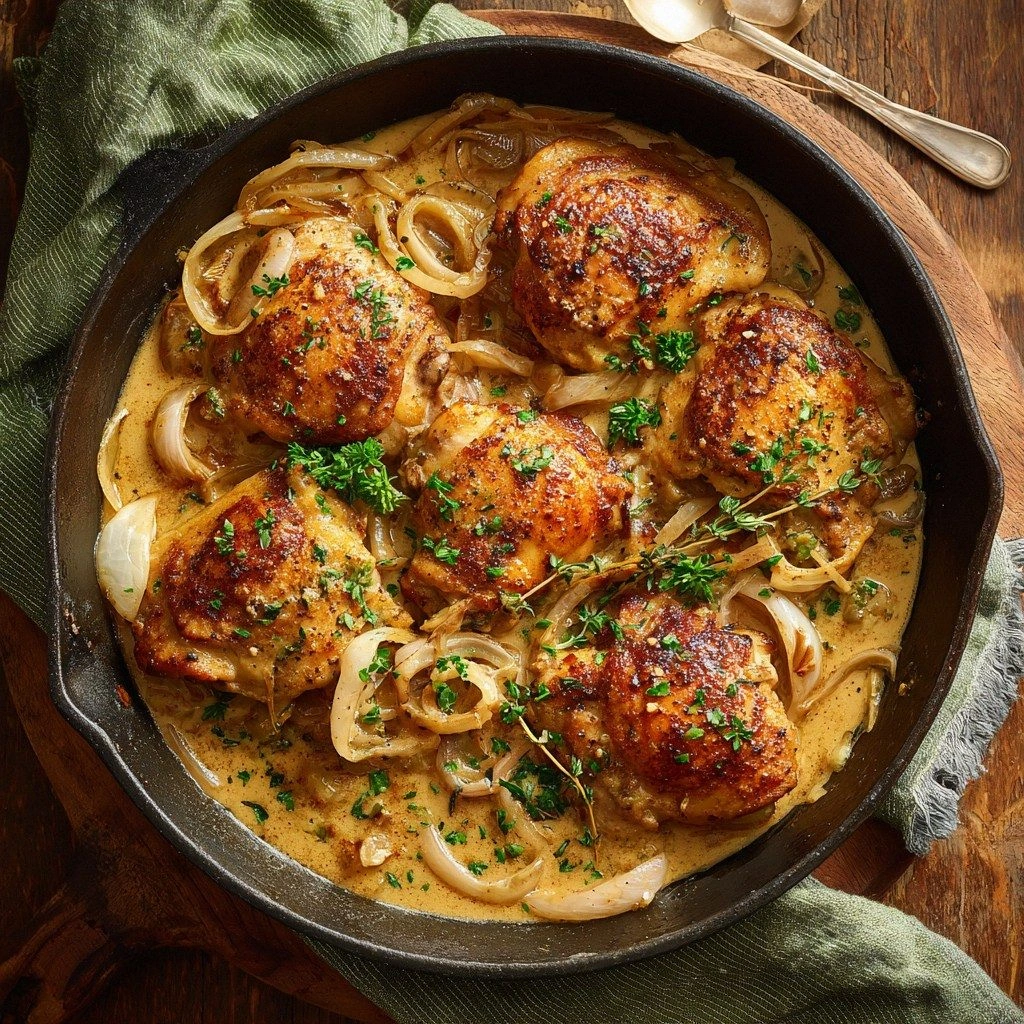
Picture this: I was halfway through a weeknight dinner, the skillet sizzling, when a stray piece of chicken slipped off the pan and landed on the countertop like a rogue grenade. The sound of that splat echoed like a tiny disaster, and my heart sank as I stared at the mess. I thought, “If I can’t even keep my chicken from flying, how will I ever master a classic dish?” That moment was the spark that ignited my quest to create a version of smothered skillet chicken so foolproof, it practically takes care of itself.
The kitchen was a sensory playground. The aroma of fresh garlic mingled with the earthy scent of onions, while the crackle of butter in the pan sounded like a jazz solo. The sight of golden-brown chicken pieces glistening in the skillet made my stomach growl with anticipation. The touch of the skillet’s heat against my fingertips felt like a promise of comfort, and the first bite would deliver a cascade of creamy, tomato‑rich flavor that tingles on the tongue. It’s the kind of meal that makes you feel like a chef in a Michelin‑star kitchen, even if you’re just cooking in your own apartment.
What sets this recipe apart is its balance of boldness and simplicity. The sauce doesn’t just coat the chicken; it envelops it like a silky blanket, while the vegetables add a satisfying crunch that breaks up the richness. The technique I’ve refined ensures that the chicken remains juicy, the sauce never separates, and the flavor profile stays consistent no matter who’s cooking. Most recipes get this completely wrong by over‑cooking the chicken or using a thin sauce that drips off. I dare you to taste this and not go back for seconds.
I’ll be honest—this dish has become my go‑to when I need to impress without the fuss. Picture yourself pulling this out of the oven, the whole kitchen smelling incredible, and having a meal that feels like a gourmet dinner without the extra steps. Let me walk you through every single step—by the end, you’ll wonder how you ever made it any other way.
What Makes This Version Stand Out
- Taste: The sauce is a harmonious blend of tomato, cream, and herbs that creates a depth of flavor you’d expect from a restaurant dish, yet it’s made entirely at home.
- Texture: The chicken stays tender and moist, while the vegetables provide a delightful bite that prevents the dish from feeling soggy.
- Simplicity: With a single skillet and a handful of pantry staples, you can have a meal ready in under an hour.
- Uniqueness: The addition of a splash of Worcestershire and a touch of paprika gives the sauce a smoky undertone that sets it apart from plain chicken recipes.
- Crowd Reaction: Friends who have tried this version say it’s “hands down the best version you'll ever make at home.”
- Ingredient Quality: Using fresh herbs and high‑quality butter elevates the dish without needing exotic ingredients.
- Cooking Method: Searing first, then simmering in a sauce, ensures maximum flavor extraction and a beautifully caramelized crust.
- Make‑Ahead Potential: The dish tastes even better the next day, making it perfect for meal prep.
Alright, let's break down exactly what goes into this masterpiece…
Inside the Ingredient List
The Flavor Base
The foundation of this dish starts with the aromatic onion and garlic. Sautéing them until they’re translucent releases natural sugars, creating a sweet backdrop that balances the acidity of tomatoes. If you skip this step, the sauce will taste flat and lack depth. For an extra layer of flavor, add a pinch of dried oregano right before the tomatoes.
The tomatoes—whether fresh or canned—contribute a bright, slightly tangy sweetness. Choosing San Marzano or plum tomatoes gives a richer, less acidic sauce. If you’re using canned, rinse them to reduce excess sodium. A splash of balsamic vinegar at the end can heighten the complexity without overpowering the dish.
The Texture Crew
Mushrooms bring earthiness and a chewy texture that contrasts nicely with the tender chicken. Slice them uniformly so they cook evenly. If you prefer a milder flavor, use button mushrooms; for a deeper taste, go for cremini or shiitake.
Bell peppers add a sweet crunch and vibrant color. Their natural sugars caramelize slightly when seared, enhancing the overall flavor profile. A mix of red, yellow, and green peppers provides a spectrum of sweetness and visual appeal.
The Unexpected Star
Heavy cream might seem like an indulgent addition, but it’s essential for creating a silky, cohesive sauce that clings to the chicken. The fat content helps stabilize the sauce, preventing separation during simmering. If you’re looking for a lighter version, substitute half‑fat cream or a splash of Greek yogurt for a tangy twist.
Butter adds a glossy finish and a rich, buttery note that elevates the dish. It also aids in caramelizing the chicken edges, giving them that coveted golden crust. A small amount of butter (two tablespoons) is enough; too much can make the sauce greasy.
The Final Flourish
Fresh herbs like thyme and rosemary bring an herbal brightness that lifts the entire dish. They’re best added after the sauce has reduced slightly to preserve their aroma. If you’re not a fan of rosemary, substitute with sage for a slightly different herbal note.
Worcestershire sauce injects umami and a subtle tang that deepens the sauce’s complexity. A tablespoon is enough to make a difference; too much can overpower the delicate balance. If you’re avoiding Worcestershire, a dash of soy sauce can work as a substitute, but watch the sodium level.
Shredded cheddar cheese, optional yet highly recommended, melts into the sauce, adding a creamy, savory finish. The cheese’s saltiness complements the tomato base, and the melt creates a comforting, gooey texture. If dairy is a concern, try a sprinkle of nutritional yeast for a cheesy flavor without the dairy.
Everything's prepped? Good. Let's get into the real action…
The Method — Step by Step
- Season the chicken thighs with salt, pepper, paprika, and a dash of red pepper flakes. Let them rest at room temperature for 10 minutes to absorb the flavors. This step ensures a juicy interior and a crisp exterior. I dare you to taste the seasoned chicken before cooking; it’s already a flavor bomb.
- Heat a large skillet over medium‑high heat and add the olive oil. Once shimmering, add the chicken thighs skin‑side down (if using skin‑on). Sear for 5–6 minutes until a deep golden crust forms. Flip and sear the other side for 4 minutes. The sizzle should sound like applause—this is the moment of truth.
- Remove the chicken and set aside. In the same skillet, reduce heat to medium and add the butter. Let it melt, then toss in the sliced onions, bell pepper, and mushrooms. Cook until they’re softened and slightly caramelized, about 5 minutes. The aroma will be irresistible.
- Add the minced garlic and cook for 30 seconds until fragrant. Be careful not to burn it; a burnt garlic note will ruin the sauce. Then pour in the diced tomatoes and stir to combine. The tomatoes should reduce slightly, concentrating their flavor.
- Return the chicken thighs to the skillet, nestling them into the tomato mixture. Sprinkle the dried thyme and rosemary over the top. Pour in the chicken broth, making sure the liquid covers about half the chicken. This liquid will become the base of the sauce.
- Cover the skillet and let everything simmer for 15 minutes. The chicken should be cooked through (internal temp 165°F) and the sauce should thicken. Flip the chicken once halfway through to ensure even cooking. The sauce’s texture should be thick enough to coat the back of a spoon.
- Stir in the heavy cream, Worcestershire sauce, and shredded cheddar. The sauce should become silky and glossy. Let it simmer uncovered for another 5 minutes until the cheese melts completely. The final dish should have a glossy, velvety finish.
- Garnish with chopped parsley and serve immediately over rice, mashed potatoes, or a crusty baguette. The parsley adds a fresh, green pop that cuts through the richness. Enjoy the first bite—taste the harmony of textures and flavors.
That's it — you did it. But hold on, I've got a few more tricks that'll take this to another level…
Insider Tricks for Flawless Results
The Temperature Rule Nobody Follows
Many cooks think high heat is always better, but controlling the temperature is key to a perfect crust and sauce. Start with medium‑high to sear the chicken, then reduce to medium‑low when adding tomatoes to avoid burning. If you’re using a non‑stick pan, lower the heat even further to prevent sticking and scorching.
Why Your Nose Knows Best
Before adding the cream, give the sauce a sniff. If it smells slightly sour, it’s ready to balance with the richness of the cream. A neutral aroma indicates more reduction is needed. Your nose is the quickest way to gauge readiness—trust it.
The 5-Minute Rest That Changes Everything
After you remove the skillet from heat, let the dish rest for five minutes. This rest allows the juices to redistribute throughout the chicken, ensuring each bite is moist. Skipping this step often results in a slightly dry center.
Cheese: The Secret to Creaminess
If you want an extra creamy texture, sprinkle a handful of shredded mozzarella on top before the final simmer. It melts beautifully and adds a subtle, milky flavor that complements the cheddar without overpowering it.
Avoiding Separation
The sauce can separate if the heat is too high. Keep the skillet at a steady simmer and stir frequently. If separation does occur, whisk in a tablespoon of cold water to bring it back together.
The Final Touch of Freshness
Just before serving, squeeze a splash of lemon juice over the top. The acidity brightens the dish and balances the richness. It also enhances the herbs’ flavors, giving the dish a fresh lift.
Creative Twists and Variations
This recipe is a playground. Here are some of my favorite ways to switch things up:
Smoky Chipotle Version
Swap the paprika for chipotle powder and add a dash of chipotle in adobo sauce. The result is a smoky, slightly spicy sauce that pairs beautifully with corn tortillas or a Mexican rice base.
Mediterranean Flair
Replace the tomatoes with sun‑dried tomatoes and add a handful of kalamata olives. Finish with a sprinkle of feta cheese and chopped fresh oregano for a Mediterranean twist.
Creamy Coconut Curry
Use coconut milk instead of heavy cream and stir in a tablespoon of curry powder. This version brings a warm, aromatic depth that goes well with jasmine rice.
Vegetarian Delight
Omit the chicken and add a mix of chickpeas, diced sweet potatoes, and spinach. The sauce will soak up the veggies, creating a hearty, plant‑based main dish.
Pasta Power
Serve the sauce over al dente fettuccine and top with grated parmesan. The pasta swallows the sauce, creating a comforting, all‑in‑one meal.
Low‑Carb Option
Swap rice or potatoes for cauliflower rice. The low‑carb base keeps the dish light while still allowing the sauce to shine.
Storing and Bringing It Back to Life
Fridge Storage
Cool the dish to room temperature, then cover tightly and refrigerate for up to 3 days. The sauce will thicken in the fridge, so stir before reheating to restore its silky texture.
Freezer Friendly
Divide into individual portions and place in freezer‑safe containers. Freeze for up to 2 months. When ready to eat, thaw overnight in the fridge and reheat gently on the stove.
Best Reheating Method
Reheat on low heat, adding a splash of water or broth to loosen the sauce. Stir constantly to prevent sticking. A quick 5‑minute simmer restores the sauce’s original richness.