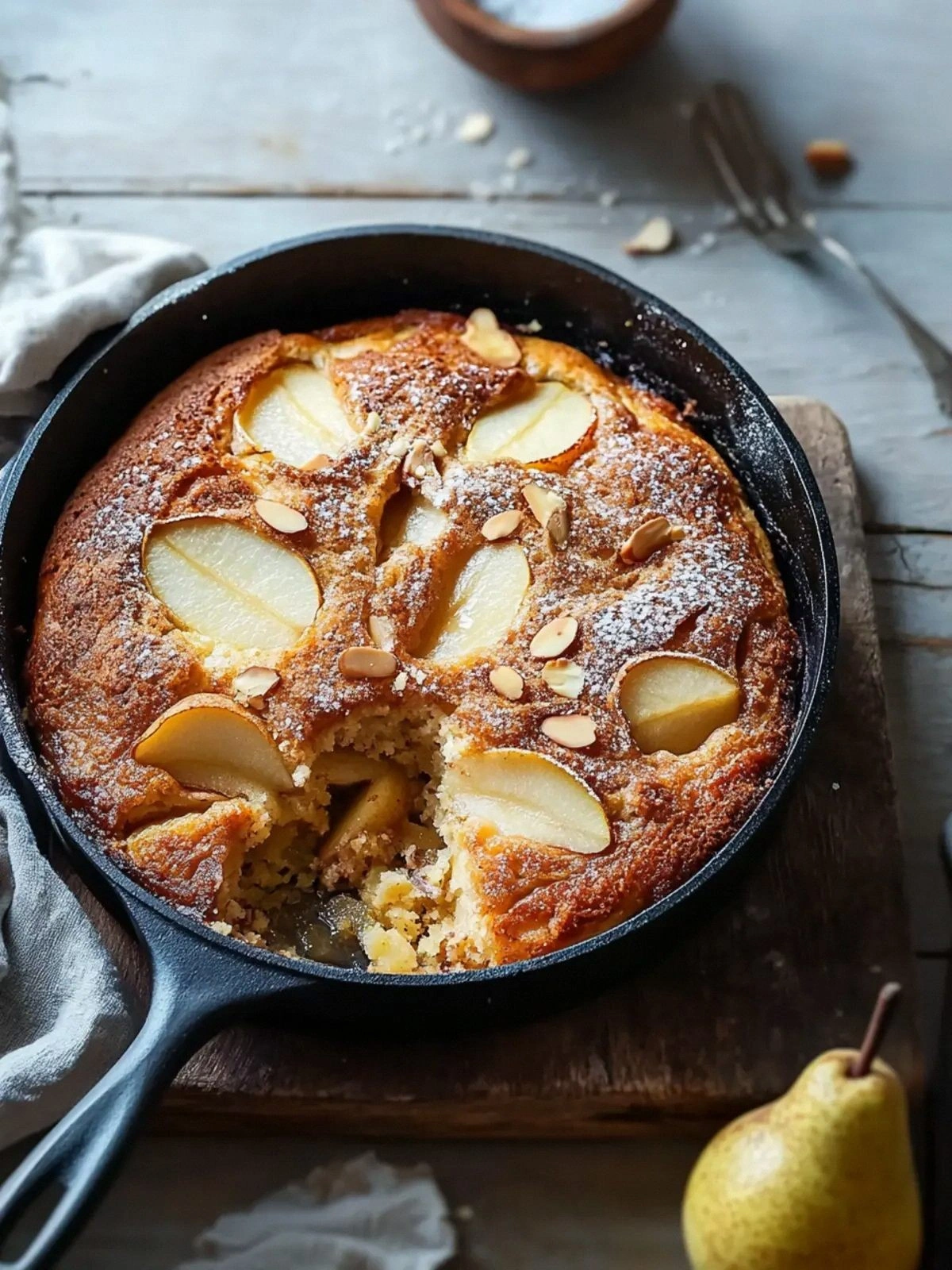
I was standing in a kitchen that smelled like burnt toast and regret, staring at a pan that had been left on the stove for too long. The moment I realized the batter had browned on the bottom and the air was thick with the scent of over‑cooked sugar, I made a promise to myself: I would never let a simple skillet cake become a culinary disaster again. That night, I pulled out a handful of pears, a splash of buttermilk, and the secret weapon of my pantry—almonds—and decided that this would be the day I invented the ultimate spiced pear buttermilk almond skillet cake. It’s the kind of dish that turns a regular evening into a cozy, aromatic celebration, and it’s so simple that even a kitchen novice can master it with confidence.
Picture the scene: a gentle hum from the stove, a drizzle of melted butter glinting in the light, the sweet, earthy aroma of freshly sliced pears mingling with the warm, spicy perfume of cinnamon and cardamom. The sound of the batter sizzling against the hot skillet is like a jazz solo—unexpected, lively, and utterly satisfying. As the cake rises, the edges caramelize, forming a golden crust that crackles when you lift it, and the center stays moist, a tender, custard‑like core that melts in your mouth. Every bite is a harmony of sweet, nutty, and spicy notes, with a subtle tang from the buttermilk that lifts the flavors like a bright chorus.
What makes this version stand out is not just the combination of flavors but the meticulous balance of textures and the clever use of ingredients that elevate the whole experience. The raw caster sugar creates a delicate crunch on the surface, while the almond flour adds a nutty undertone that complements the pears perfectly. The buttermilk’s acidity tenderizes the batter, giving it a light, airy lift, and the vanilla and citrus rind infuse it with a fragrant depth that feels like a summer breeze. The result is a skillet cake that looks like a dessert, tastes like a comfort food, and feels like a warm hug wrapped in a flaky, buttery crust.
And here’s the kicker: the twist that will blow your mind—adding a splash of honey just before the cake finishes baking. Honey caramelizes into a glossy sheen, creating a caramelized crust that’s both sweet and slightly bitter, a contrast that makes each bite feel like a revelation. I dare you to taste this and not go back for seconds. If you’ve ever struggled with a bland, soggy skillet cake, you’re not alone—and I’ve got the fix that turns it into a showstopper.
What Makes This Version Stand Out
- Flavor Fusion: The marriage of pear, almond, and citrus rind creates a symphony of sweet and subtle tartness that lifts the palate.
- Texture Contrast: A crisp, caramelized exterior meets a moist, custard‑like interior—every bite is a textural delight.
- Ingredient Simplicity: Only thirteen ingredients, all common pantry staples, yet each plays a pivotal role.
- Spice Balance: Cinnamon and cardamom work together to give a warm, exotic undertone without overpowering the fruit.
- Make‑Ahead Potential: The batter can be pre‑mixed and refrigerated for up to 24 hours, making it a perfect last‑minute treat.
- Audience Appeal: From dessert lovers to brunch enthusiasts, this skillet cake satisfies every craving.
Alright, let’s break down exactly what goes into this masterpiece…
Inside the Ingredient List
The Flavor Base
Raw caster sugar is the secret to that subtle, crystalline crunch you’ll taste on the first bite. It dissolves quickly, allowing the spices to permeate the batter before the sugars caramelize on the surface. If you’re looking for a slightly healthier option, you could substitute it with a natural sweetener like maple syrup, but be aware that the texture will shift toward a denser crumb.
Plain flour provides the structure and the foundation of the cake. It’s the backbone that holds everything together, ensuring the batter doesn’t collapse when poured into the hot skillet. A higher protein flour will give a chewier bite, while a lower protein flour will result in a softer crumb. For a lighter texture, sift the flour with the spices before adding.
Almond flour adds a delicate nutty flavor and a moist, tender crumb. It also helps bind the batter, giving the cake a slightly firmer structure that holds the pear pieces in place. If you’re allergic to nuts or prefer a vegan version, you can replace almond flour with oat flour, but the flavor profile will change noticeably.
The Texture Crew
Ground cinnamon and cardamom are the dynamic duo that bring warmth and depth. Cinnamon adds a sweet, woody aroma, while cardamom contributes a citrusy, slightly floral note that brightens the dish. Together, they create a spice profile that feels both comforting and exotic, reminiscent of a cozy winter market.
Baking powder is the leavening agent that gives the cake its airy lift. Without it, the batter would sink and become dense. Make sure to use fresh baking powder; old or expired powder can cause the cake to rise unevenly or fail to rise at all.
Buttermilk introduces acidity that tenderizes the batter, breaking down gluten strands and creating a tender crumb. It also adds a subtle tang that balances the sweetness of the pears and honey. If you don’t have buttermilk, you can create a quick substitute by adding a tablespoon of lemon juice or vinegar to a cup of milk and letting it sit for five minutes.
The Unexpected Star
The pears are the star of the show. Their natural sweetness and soft flesh provide a juicy burst that contrasts with the crunchy almond bits. Slice them into thin wedges or small cubes so they cook evenly and release their juices without turning mushy. If you prefer a sweeter version, choose ripe Bartlett or Anjou pears; if you like a slight tartness, try Bosc pears.
Almonds, toasted to a golden brown, add a satisfying crunch and a nutty undertone that complements the almond flour. Toasting them in a dry skillet for a few minutes before adding them to the batter intensifies their flavor and prevents them from becoming stale.
The Final Flourish
Vanilla extract brings a sweet, creamy aroma that rounds out the flavor profile. It’s a classic ingredient in desserts, but in this recipe, it works in tandem with the citrus rind to create a bright, fragrant finish. A dash of lemon or orange zest will give a fresh citrus note that cuts through the richness.
Honey, added just before the cake finishes baking, caramelizes into a glossy sheen and creates a slightly bitter undertone that balances the sweetness of the pears and sugar. It also adds a natural, floral sweetness that is more complex than refined sugar.
Vanilla ice‑cream is the final indulgent topping that turns the skillet cake into a dessert‑style treat. It melts into a creamy sauce that coats the warm cake, adding a cool, silky contrast that feels like a sweet, comforting blanket.
Everything's prepped? Good. Let's get into the real action…
The Method — Step by Step
- Preheat a medium‑sized skillet over medium heat and add 1/2 cup of melted butter. Let the butter foam, then swirl to coat the entire surface. This butter base will create a golden crust and prevent sticking. When the butter starts to bubble, it’s ready for the batter.
- In a large bowl, whisk together 1 cup raw caster sugar, 1.5 cups plain flour, 0.5 cup almond flour, 1 tsp ground cinnamon, 0.5 tsp ground cardamom, and 1 tbsp baking powder. The dry mix should look like fine sand with a hint of spice. Sift it once more to remove any clumps, ensuring a smooth batter.
- In another bowl, combine 1 cup buttermilk, 2 large eggs, 1 tsp vanilla extract, and 1 tbsp lemon or orange rind zest. Beat until the mixture is frothy and the egg whites start to form soft peaks. The citrus zest will release essential oils that brighten the overall flavor. Kitchen Hack: Whisk the eggs first, then add the buttermilk gradually to avoid curdling.
- Pour the wet mixture into the dry ingredients, stirring gently with a wooden spoon or silicone spatula. Fold until just combined—over‑mixing will toughen the cake. The batter should be thick but pourable; add a tablespoon of water if it’s too dry.
- Fold in the sliced pears and 0.5 cup natural almonds, making sure each piece is evenly coated. The pears will release juice as they cook, creating a syrupy glaze that binds the cake together. Keep the mixture gentle; you don’t want to break the pears into mush.
- Pour the batter into the buttered skillet, spreading it evenly with a spatula. Reduce heat to medium‑low and cover with a lid. Cook for 12 minutes; the edges should start pulling away from the skillet, and the center should set but still look slightly wobbly. Watch Out: If the heat is too high, the batter will brown too quickly on the outside while remaining raw inside.
- Remove the lid, drizzle 2 tbsp honey over the top, and return to the stove. Cook for another 5 minutes, letting the honey caramelize into a glossy glaze. The honey will also add a subtle caramel flavor that pairs beautifully with the pears.
- When the cake is golden and the top is set, carefully flip it onto a large plate. Slide the skillet onto the plate, then flip the cake back into the skillet, placing it upside down. This trick ensures the cake retains its shape and the honey glaze stays on top.
- Let the cake rest for 5 minutes; this allows the flavors to meld and the structure to firm up. During this time, scoop 2 scoops of vanilla ice‑cream onto the warm cake. The ice‑cream will melt into a silky sauce, creating a decadent, dessert‑like finish.
- Serve immediately, garnishing with a few extra toasted almonds or a dusting of cinnamon if desired. The warm cake and cold ice‑cream together create a contrast that’s both comforting and exciting. Enjoy the symphony of flavors with each bite.
That's it — you did it. But hold on, I've got a few more tricks that'll take this to another level…
Insider Tricks for Flawless Results
The Temperature Rule Nobody Follows
Many bakers think a higher heat will speed up cooking, but for skillet cakes, medium‑low heat is essential. It allows the batter to set evenly without burning the exterior. If you’re using a cast‑iron skillet, pre‑heat it for a full minute before adding butter; this ensures a consistent temperature across the surface. A quick test: sprinkle a few drops of water on the skillet; if they dance and evaporate immediately, the heat is too high.
Why Your Nose Knows Best
The smell of caramelizing sugar is a reliable indicator that the cake is nearing perfection. When the aroma shifts from sweet to slightly nutty and then to a rich, toasty scent, you’re at the sweet spot. Trust your nose; it’s the best judge of doneness for a skillet cake because the visual cues can be deceptive.
The 5-Minute Rest That Changes Everything
After flipping the cake, let it rest for exactly five minutes before adding the ice‑cream. This brief pause allows the structure to set, preventing the cake from collapsing when the ice‑cream melts. A friend once skipped this step and the cake crumbled into a mushy mess. Trust me, the extra five minutes is worth the difference.
The Sweet‑Spice Balance Hack
If you’re a fan of a more pronounced spice kick, add an extra 1/4 tsp of ground cardamom to the dry mix. The cardamom’s bright, almost citrusy flavor will cut through the sweetness of the pears and honey, creating a more complex palate. Remember, spices are cumulative; add them gradually and taste as you go.
The Butter Swap Trick
Using clarified butter instead of regular butter gives a higher smoke point and a richer golden color. Clarified butter also leaves a cleaner, buttery flavor that doesn’t overpower the delicate fruit. If you’re short on time, simply melt butter in a saucepan, let the milk solids sink to the bottom, and pour off the clear liquid.
Creative Twists and Variations
This recipe is a playground. Here are some of my favorite ways to switch things up:
Maple‑Infused Morning
Swap the honey for maple syrup and add a splash of maple extract. The result is a breakfast‑style skillet cake that pairs beautifully with a cup of coffee or a splash of milk.
Chocolate‑Covered Delight
Fold in 1/4 cup of dark chocolate chips just before pouring the batter into the skillet. The chocolate melts into the warm cake, creating pockets of gooey goodness that are irresistible.
Citrus‑Spiced Variation
Replace the lemon or orange zest with lime zest and add a pinch of sea salt. The lime’s bright acidity will cut through the richness, giving a fresh, zesty finish.
Nut‑Free Version
Omit the natural almonds and add 1/4 cup of chopped walnuts or pistachios. The nuts still provide crunch, but the flavor profile shifts slightly toward a more earthy tone.
Gluten‑Free Adaptation
Replace the plain flour with a gluten‑free blend that contains xanthan gum. Keep the almond flour as is, and the cake will maintain its structure while being safe for gluten‑sensitive diners.
Spiced Apple Twist
Swap pears for apples, using a mix of sweet and tart varieties. The apple’s natural juiciness will create a different glaze, and the spices will complement its flavor beautifully.
Storing and Bringing It Back to Life
Fridge Storage
Cool the cake completely, then wrap it tightly in plastic wrap and place it in an airtight container. Store in the refrigerator for up to 3 days. When ready to serve, let it sit at room temperature for 15 minutes to soften before adding ice‑cream.
Freezer Friendly
Wrap the cooled cake in foil, then place it in a freezer bag. Freeze for up to 2 weeks. Thaw overnight in the refrigerator before reheating.
Best Reheating Method
Reheat the cake in a pre‑heated oven at 350°F (175°C) for 10 minutes, then finish with a quick dip in the microwave for 15 seconds. Add a tiny splash of water before reheating to steam the cake back to perfection, maintaining moisture and flavor.